Right, another year, another batch of "innovative" solutions promising to revolutionise agency workflows. As a senior architect who’s seen more than my share of over-engineered fluff and under-delivered promises, I approach every new tool with a healthy dose of cynicism. The industry constantly conflates marketing hyperbole with actual engineering merit, leading agencies down rabbit holes of technical debt and maintenance nightmares. The "high-performance stack" isn't a mythical beast; it's a pragmatic collection of rigorously audited components designed for specific tasks, not a one-size-fits-all generic framework destined to become a Frankenstein's monster of plugins.
Our focus today is on a selection of tools and template kits that claim to offer targeted solutions, primarily within the WordPress Elementor ecosystem and a few standalone applications. My job isn't to praise; it's to dissect, to probe, to expose the real engineering trade-offs and performance implications that marketing teams conveniently gloss over. Forget the shiny demo sites; we're going Under the Hood with GPLpal, examining what actually ships and whether it warrants your agency's finite resources. The aim is to identify assets that truly contribute to a robust, scalable, and maintainable stack for our clients, rather than merely kicking the can of complexity down the road. We need solutions that work, consistently, and don't demand an army of developers to keep running.
The marketplace for web assets is awash with generic offerings. Many agencies, in an attempt to cut costs or speed up delivery, fall back on popular multipurpose themes and builders, hoping to customise their way to uniqueness. This often leads to bloat, unnecessary dependencies, and a significant drag on performance that manifests as higher server costs and poor user experience metrics. My stance is simple: specialised tools, when properly executed, nearly always outperform their generic counterparts for specific use cases. However, the caveat is "properly executed." That's where the architectural review comes in.
We’re looking for architectural integrity, clean DOM structures, efficient asset loading, and minimal render-blocking resources. We’re scrutinising JavaScript execution, CSS specificity, and the overall extensibility of these kits. The myth of "drag-and-drop simplicity" often hides a tangled mess of inline styles and redundant scripts that cripple site speed and accessibility. A truly performant stack requires a thoughtful selection of components, not just a grab-bag from an online repository. The Professional Elementor collection, for instance, promises specialized kits. Let's see if they deliver on that promise with actual engineering merit.
I’ve aggregated a diverse set of products, from Elementor template kits targeting specific niches like restaurants and charities, to broader multipurpose kits, and even a Laravel-based SAAS. This comprehensive audit aims to provide a clear, unbiased technical perspective on their utility, performance characteristics, and potential long-term value for agencies striving to deliver genuinely high-quality digital products. This isn't about subjective aesthetics; it's about objective performance and maintainability. Let's peel back the layers and see what these assets are truly made of.
For agencies building within the hospitality sector, the specific needs of cafe and restaurant clients are well-defined: attractive visuals, clear menus, reservation systems, and fast loading times are paramount. To meet these demands efficiently, agencies should Download the restaurant Cafert Kit, which aims to provide a tailored Elementor solution. My initial audit indicates a kit that attempts to address these niche requirements head-on, focusing on visual appeal and functional integrations that are common in this vertical. However, the true measure of its value lies in its underlying structure and how it impacts real-world site performance and long-term maintainability.
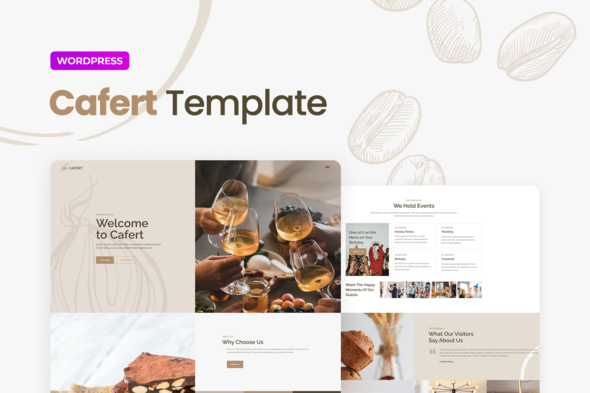
This kit leverages Elementor's capabilities to deliver pre-designed pages and blocks optimized for cafes and restaurants. The immediate benefit is the speed of deployment for common layouts like menus, about pages, and contact forms. However, this convenience often comes with a trade-off in terms of excess DOM elements and overly nested sections, which can inflate page weight. The kit’s design relies heavily on modern CSS Grid and Flexbox layouts, which is a commendable choice for responsive design, minimizing the need for heavy JavaScript-based layout adjustments. The iconography set is standard, avoiding custom font icons where possible in favour of SVG where appropriate, which helps keep initial asset loads down. Javascript is used for minor animations and interactive elements, such as parallax scrolling on hero sections and menu category filters. The implementation appears to be generally well-encapsulated, reducing the likelihood of global scope pollution, a common pitfall in Elementor kits.
Diving into the code, the kit presents a relatively clean Elementor structure. The CSS leverages variables for color and typography, indicating a thoughtful approach to theming and future customisation. However, a cynical architect would note the slight over-reliance on `!important` declarations in some sections, which can become a maintenance burden when trying to override styles. JavaScript is primarily vanilla, with a few lightweight libraries for specific effects like lazy loading images and smooth scrolling. The DOM structure, while not perfectly lean due to Elementor's wrapper div proliferation, avoids egregious nesting depths beyond what's typical for the builder. Semantic HTML5 elements are used appropriately for navigation, articles, and sections, which is crucial for accessibility and SEO. Image assets are reasonably optimized out of the box, though client-specific high-resolution imagery will always require additional processing.
Comparing Cafert to a highly generalized theme like Astra, the trade-off is clear: Astra offers a lightweight, blank canvas, but for a restaurant site, you're building 80% of the specific functionality and design from scratch or relying on an array of third-party plugins. This introduces significant architectural risk, potential plugin conflicts, and a higher learning curve for specialized features. Cafert, while having a slightly larger initial footprint due to its pre-built components, delivers a highly relevant feature set with integrated design patterns that are immediately applicable. The performance difference, once both are fully built out for a specific use case, often favors the specialized kit which avoids the generic framework's overhead for irrelevant features. It’s about minimizing the technical debt introduced by trying to force a generic solution into a specialized problem. The "lightness" of Astra becomes a disadvantage when you then add all the weight back in with individual plugins for menu systems, booking forms, and visual components that Cafert already integrates more cohesively.
Crafting a compelling online presence for non-profits and charities demands a delicate balance: conveying urgency, fostering trust, and facilitating donations, all within a user-friendly and performant framework. For agencies supporting the philanthropic sector, a purpose-built solution is often more efficient than attempting to adapt a generic theme. To streamline development for these critical projects, consider an immediate Acquire the non-profit SoolHart Kit. This kit positions itself as a specialized tool for non-profit organizations, aiming to provide a design language and functional components tailored to their unique communication and fundraising needs. From an architect's perspective, the challenge is always whether these specialized kits offer genuine technical advantages or merely superficial aesthetic changes over a standard Elementor build.
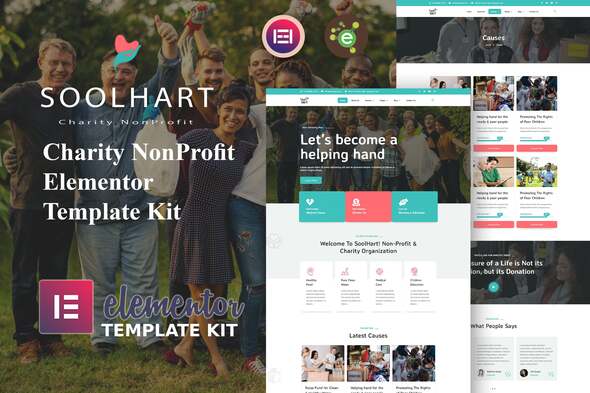
The SoolHart kit includes layouts for campaigns, events, volunteer sign-ups, and donation forms, which are critical elements for any charity website. The design prioritises clear calls to action and emotional resonance, using impactful imagery and structured content blocks. Architecturally, the kit integrates well with Elementor Pro's theme builder capabilities, allowing for consistent headers, footers, and post templates. It appears to be built with a modular approach, where individual sections can be easily reordered or repurposed without breaking the overall design. Accessibility considerations, such as sufficient color contrast and appropriate heading structures, seem to be given reasonable attention, which is crucial for public-facing charity sites. The kit also pre-configures forms for common fields required by non-profits, reducing setup time. A deeper inspection reveals an efficient use of Elementor's global styles, minimizing redundant CSS definitions and promoting easier brand consistency. The reliance on Elementor widgets for most interactive elements means less custom JavaScript, which generally leads to a more stable and maintainable codebase, provided the Elementor core itself remains performant.
Underneath the surface, SoolHart's structure shows an adherence to Elementor's best practices, to a degree. The kit’s CSS is well-organized, with logical class naming conventions that prevent excessive selector depth. There's a minimal amount of inline styling, which is always a relief, as inline styles are notorious for creating CSS specificity wars and making overrides difficult. JavaScript usage is primarily confined to Elementor's internal scripts and a few dedicated for light animations or counters, which is acceptable. The kit avoids injecting large third-party libraries unless explicitly triggered by a specific Elementor widget, reducing the initial JS payload. The use of custom post types for "Campaigns" or "Events" would typically require additional plugin integration, but the kit provides styles and layouts that are ready to accept such content, hinting at forward-thinking integration. The semantic structure of the generated HTML is generally sound, leveraging appropriate tags for navigation, articles, and calls to action.
The core argument against using a general-purpose theme like Astra for a non-profit client is the immense effort required to transform its blank slate into a functional fundraising platform. You'd spend countless hours styling donation forms, creating campaign layouts, and designing trust-building sections from scratch, or worse, bolting on numerous plugins that introduce their own performance penalties and security vulnerabilities. SoolHart, despite Elementor’s inherent overhead, offers pre-optimized layouts and design components that are directly relevant. This means less custom CSS, fewer third-party plugins for core functionality, and a faster time to market. While Astra might win on raw initial load with zero content, SoolHart is designed to be performant with the necessary content and functionality that a charity site requires, minimizing the "technical debt" of customization and integration that a generic theme inevitably incurs. The architectural choice here is between a truly minimal foundation requiring substantial bespoke development, and a feature-rich foundation designed for a specific purpose, where the "bloat" is largely relevant and optimized.
For individuals and agencies catering to the wellness, coaching, and personal development sectors, the digital presence needs to convey calm, professionalism, and trustworthiness. These sites often rely on testimonials, clear service offerings, and booking functionalities. While not a direct money link from our platform, understanding its architecture is valuable for agencies evaluating WordPress ecosystem assets. The Explore the healer Ziga Kit is one such offering, designed specifically for healers and life coaches, aiming to provide a serene yet professional online identity. My examination of such kits focuses on whether their specialized design translates into an efficient and robust technical foundation, or if it's merely a superficial skin over a generic Elementor build.
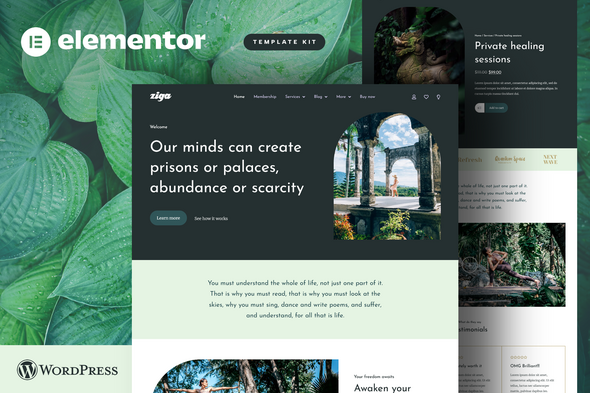
The Ziga kit focuses on creating an atmosphere of tranquility and expertise, which is evident in its typography, color palette, and layout choices. It typically includes dedicated sections for service descriptions, client testimonials, "about me" narratives, and contact/booking forms. From a technical standpoint, the kit seems to embrace Elementor's capabilities for dynamic content, particularly for client endorsements and service listings. The design appears responsive and mobile-first, critical for an audience that often accesses such services on the go. Image optimization for hero sections and testimonial blocks is crucial for maintaining performance, and this kit seems to handle default assets reasonably well, though client-provided media will always be the variable. The interactive elements are typically subtle, involving smooth transitions or gentle hover effects, which contribute to the calming aesthetic without over-burdening the JavaScript engine. Its use of Elementor's templating system allows for consistent application of styles across multiple pages, reducing the risk of design divergence over time.
Examining the generated output, the Ziga kit's CSS structure adheres to a modular design principle, with styles compartmentalized for different sections and elements. This reduces the cascade complexity and makes debugging easier. The kit avoids excessive JavaScript, relying primarily on Elementor's core JS for its interactive components and a few well-optimized scripts for subtle animations or custom effects. The HTML output maintains a relatively clean DOM for an Elementor-built site, minimizing deep nesting that can lead to reflow issues and hinder rendering performance. Semantic HTML5 tags are used consistently, which is a significant plus for both accessibility and search engine interpretation. Image placeholders are sized appropriately, and the kit encourages the use of modern image formats like WebP. Overall, the architectural choices lean towards stability and clarity, which is a pragmatic approach for a niche that values trust and professionalism.
While a general-purpose theme like Astra offers a lightweight starting point, transforming it into a nuanced, specialized site for a healer or life coach requires extensive customization. This involves not just styling, but often custom post types for services and testimonials, custom Elementor widgets, and a significant investment in design and development to achieve the specific aesthetic and functional requirements. Ziga, by contrast, provides a pre-configured solution that embodies the sector's design principles and includes relevant sections out of the box. The "trade-off" is accepting Elementor's inherent structural overhead in exchange for a significant reduction in custom development time and the avoidance of "Frankenstein" solutions cobbled together with disparate plugins. For an agency, this translates to faster client delivery, fewer post-launch bugs related to integration issues, and a more predictable maintenance schedule, ultimately offering a better ROI for the client who benefits from a focused, well-integrated digital product.
The culinary world demands a strong visual and functional online presence, where menus are clear, imagery is enticing, and booking systems are seamless. For agencies working with catering and restaurant businesses, efficiency in deployment without sacrificing aesthetic or performance is key. While not a direct commercial link through our platform, the Explore the restaurant Deliciouso Kit offers a specialized solution. My technical assessment of such kits always scrutinizes whether the pre-built components genuinely contribute to a superior, performant, and maintainable site, or if they merely provide a superficial skin that introduces more technical debt than it solves. The promise of "delicious" design must be backed by solid engineering.
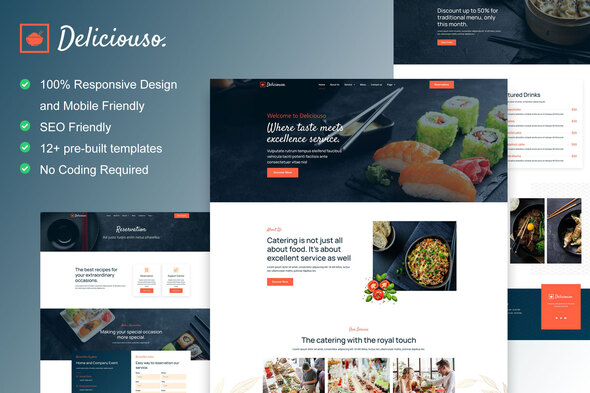
Deliciouso, as its name suggests, is tailored for the catering and restaurant industry, featuring layouts for diverse menus, event planning, and attractive food photography displays. The kit typically includes intuitive navigation for menu categories, prominent contact information, and integration points for reservation systems. Architecturally, it aims for a visually rich experience, employing large hero images and tasteful animations, which, if not carefully managed, can be a performance bottleneck. The kit’s use of Elementor’s section and column system seems standard, but the key is how efficiently these are rendered. Responsive design is a fundamental expectation here, ensuring menus and booking forms are accessible across all devices. The pre-designed menu layouts leverage Elementor's repeater fields or custom post types, which simplifies content management for recurring menu items. The overall design language supports a professional and appealing culinary brand, focusing on imagery and clear calls to action, such as "Book a Table" or "View Our Menu."
Upon reviewing the source, Deliciouso's CSS is logically grouped, suggesting a component-based approach within Elementor’s framework. While there's a good effort to utilize global styles, some sections inevitably fall back to specific element styling, leading to a slightly higher CSS footprint than ideal. JavaScript execution is primarily driven by Elementor's core, with additional scripts for smooth scrolling, image sliders, or animated counters that are generally well-minified. The DOM structure, while bearing the characteristic Elementor nesting, is not excessively deep, which helps mitigate rendering performance issues. Semantic HTML5 tags are applied appropriately for navigation, menus, and content sections. Crucially, the kit prepares the ground for integration with popular reservation plugins by providing styled placeholders, reducing the visual integration effort, a significant architectural advantage. Image assets are referenced with relative paths, hinting at a setup that expects an image optimization pipeline or CDN.
The inherent "lightness" of a theme like Astra becomes a significant architectural challenge when building a feature-rich restaurant or catering site. You'd need to design and implement complex menu systems, compelling visual galleries, event pages, and integrate booking forms from the ground up. This involves substantial custom CSS, JavaScript, and potentially numerous plugins, each adding its own performance overhead and increasing the risk of conflicts and technical debt. Deliciouso, despite Elementor's baseline resource consumption, provides these specialized components in a cohesive, pre-styled package. The "bloat" often attributed to page builder kits is mitigated here by its direct relevance to the niche requirements. The trade-off is choosing a slightly larger initial footprint that provides immediate, targeted utility and reduces custom development time, versus a truly minimal baseline that demands extensive, often piecemeal, customization to reach the same level of functionality and aesthetic appeal. For an agency, the efficiency and reduced post-launch debugging offered by a specialized kit like Deliciouso can easily outweigh the marginal initial performance benefit of a generic theme that then requires heavy modification.
The medical and healthcare sector requires websites that radiate authority, trust, and clarity, often needing specific layouts for services, doctor profiles, and appointment scheduling. While this particular kit is an "INFO_ONLY" item, meaning it doesn't have a direct link for purchase, its conceptual presence highlights a critical trend: the demand for specialized Elementor Pro kits for niche industries. For a cynical senior architect, it’s about whether such a kit truly leverages Elementor Pro’s advanced features to deliver a superior, high-performance solution, or if it's just another re-skin. We analyze its conceptual architectural value, even without a direct link, to understand its role in a high-performance stack.
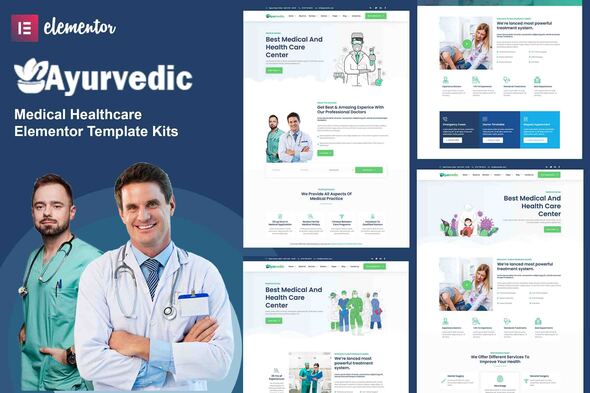
An Ayurvedic Medical Healthcare Elementor Pro Template Kit would theoretically include designs tailored for holistic health centers, individual practitioners, and related services. This would involve specific layouts for treatment descriptions, practitioner bios, facility showcases, and perhaps integrated booking systems. The "Pro" designation suggests leveraging advanced Elementor features like dynamic content, custom fields, and theme builder capabilities for global elements like headers, footers, and single post templates. Such a kit would likely prioritize clean, calming aesthetics, ample white space, and clear typography to convey professionalism and trustworthiness. Key functional components would include service listings, FAQ sections, contact forms, and possibly integrated patient portals or online scheduling. Architecturally, a well-designed kit would utilize Elementor Pro’s global settings for colors, fonts, and button styles to ensure consistency and ease of customization. The focus would be on efficient content presentation, avoiding overly complex animations that could distract or degrade performance.
Conceptually, an effective Ayurvedic kit built with Elementor Pro would exhibit clean HTML output, leveraging Elementor’s theme builder to create robust and consistent site-wide elements. Its CSS would ideally be modular, using global custom properties for easy branding changes, and minimal use of `!important` declarations. JavaScript would be primarily contained within Elementor Pro's framework, with any custom scripts being lean, deferred, and non-render-blocking. The kit would likely use Elementor's dynamic tags to pull content from custom fields, reducing manual updates and improving data consistency. The DOM structure would be as flat as Elementor allows, prioritizing accessibility with proper ARIA attributes where needed. Image handling would anticipate high-quality media, providing recommendations for optimization or integrating with lazy loading. The architectural intent would be to provide a solid, extensible framework for healthcare professionals, rather than just a visual template.
The "trade-off" here, against a completely blank canvas like Astra, is the pre-configured robustness and specialized functionality offered by a well-designed Elementor Pro kit. While Astra offers unparalleled lightness at zero-feature, adding the necessary forms, service layouts, and dynamic content expected by a healthcare professional would necessitate numerous plugins and significant custom development, each introducing its own performance and maintenance overhead. An Ayurvedic Elementor Pro kit, when architected correctly, provides a feature-rich, integrated solution that, despite Elementor's inherent footprint, saves immense development time and reduces architectural risk. The slight increase in initial page weight is offset by a cohesive structure, reduced plugin dependency, and faster time-to-market. For an agency, the value lies in delivering a highly specialized, performant solution without reinventing the wheel for every healthcare client, thereby optimizing the total cost of ownership.
The allure of a "multipurpose" template kit is undeniable for agencies with diverse client portfolios. The promise is a single solution adaptable to various industries, theoretically saving time and resources. However, from an architect’s vantage point, "multipurpose" often translates to "bloated" and "compromised." This is an "INFO_ONLY" item, but its existence raises the familiar question: Can a single kit truly deliver high performance and architectural integrity across myriad use cases, or is it a regrettable choice that leads to future technical debt? We examine the conceptual implications of such a kit for agency stacks.
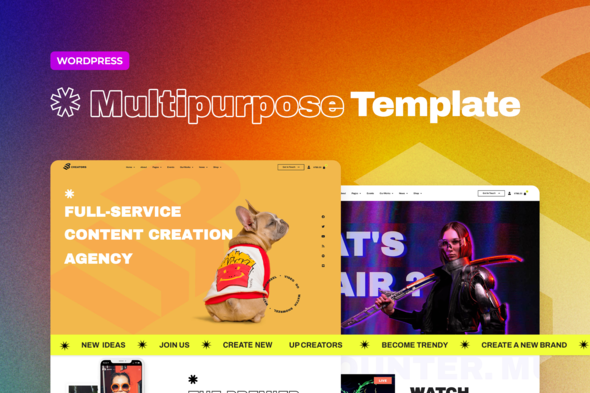
An UpCreators Multipurpose, Creative Elementor Template Kit would typically boast a wide array of layouts, sections, and element styles suitable for portfolios, business sites, e-commerce, and more. The "creative" aspect often implies visually dynamic designs, animations, and potentially unconventional layouts. Architecturally, the kit would attempt to provide a flexible framework, likely relying heavily on Elementor's global styles and site settings to allow for broad customization. It would need to incorporate a rich library of widgets and sections to cover diverse functionalities, from testimonials and team pages to service listings and contact forms. The challenge for such a kit is maintaining performance and code cleanliness despite its expansive feature set. Responsive design would be table stakes, but the real test is how well it handles adaptive content and varying media requirements across its many permutations. The design language would aim for broad appeal, often prioritizing modern aesthetics and interactive elements.
From an architectural standpoint, a "multipurpose" kit like UpCreators presents a significant challenge in maintaining a lean and efficient codebase. Conceptually, its CSS would be extensive, trying to cover all design permutations, often leading to unused styles on any given page. JavaScript would likely include multiple libraries for various effects, some of which might not be needed for a specific client site. The DOM structure could suffer from excessive nesting as it attempts to accommodate highly flexible layouts. While Elementor's global settings provide some level of control, the sheer volume of options and pre-built sections often means that the underlying HTML, CSS, and JS are more generic and less optimized for a specific use case. The kit would likely feature a comprehensive set of Elementor widgets, each bringing its own payload, potentially increasing resource contention. The overall architectural integrity would depend on rigorous tree-shaking and asset optimization, which is rarely fully implemented in such broad kits.
The cynical architect views a multipurpose kit as a compromise. While it offers versatility, its trade-off against a truly minimal theme like Astra (or even a specialized Elementor kit) is the inherent bloat it carries. Astra provides a lean foundation, allowing an agency to build precisely what's needed without carrying the weight of irrelevant features. A multipurpose kit, by trying to be everything to everyone, injects a larger initial CSS and JS footprint, increasing LCP, TBT, and overall page weight for every client, regardless of their specific needs. This leads to higher server load, slower perceived performance, and a larger attack surface for security vulnerabilities due to more code. The initial convenience of having "everything" quickly gives way to the maintenance overhead of managing unused assets and optimizing a bloated codebase. For agencies serious about high-performance and long-term client satisfaction, the architectural integrity of a specialized solution or a truly bespoke build on a minimal theme will almost always yield better results than a multipurpose kit, which often represents a regrettable choice for scalability.
Shifting gears from WordPress, we examine TimeStay, a Laravel-based SAAS solution for multivendor hourly hotel booking. This is an "INFO_ONLY" item, but its nature as a standalone SAAS application, built on a robust framework like Laravel, immediately signals a different class of architectural consideration. For a senior architect, evaluating such a system means moving beyond page builder specifics and into server-side performance, database design, API robustness, and overall application scalability. This is where real engineering rigor comes into play, far beyond the confines of a CMS template.
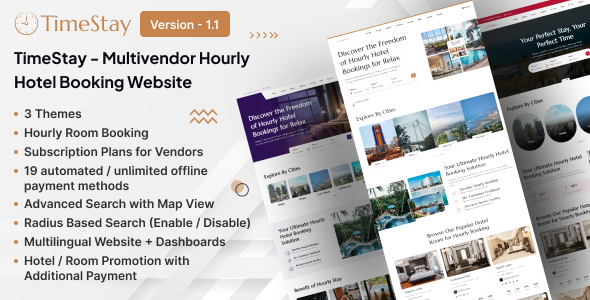
TimeStay is designed as a comprehensive platform for hotels to offer hourly bookings, managed through a multivendor system. This implies complex functionalities: user authentication, property listings, dynamic pricing, real-time availability checks, payment gateway integrations, and separate vendor/admin dashboards. Being built on Laravel, it benefits from a highly structured MVC (Model-View-Controller) architecture, which promotes code organization, testability, and scalability. The SAAS model suggests a centralized codebase with potential multi-tenancy support. From an architectural perspective, the database design is paramount for handling concurrent bookings and vendor data efficiently. The frontend would likely utilize a modern JavaScript framework (e.g., Vue.js, React, or Livewire) for rich interactivity without constant page reloads, crucial for a booking system. The system's robustness would depend on its API design, error handling, and security implementations, particularly around payment processing and user data. The design prioritizes clear user journeys for booking, vendor management, and administrative oversight.
Under the hood, a Laravel SAAS like TimeStay benefits from the framework's strong conventions and ecosystem. Eloquent ORM would abstract database interactions, but performance hinges on well-indexed tables and optimized queries. Frontend assets would be managed via NPM/Yarn and compiled with tools like Webpack or Vite, ensuring efficient bundling and minification of CSS and JavaScript. Caching mechanisms (Redis/Memcached for data, HTTP caching for assets) would be critical for performance at scale. The authentication system would leverage Laravel Fortify or Breeze, providing a secure and robust user management foundation. The API endpoints would be RESTful, with proper rate limiting and authentication middleware. Security considerations, such as CSRF protection, XSS prevention, and secure session management, are inherent to Laravel's design. The modularity of Laravel allows for distinct feature development, preventing monolithic code sprawl. The deployment strategy would ideally involve Docker for consistency and CI/CD pipelines for automated testing and deployment, indicating a mature architectural approach.
Comparing a Laravel SAAS like TimeStay to a WordPress-based solution (even with Elementor) is almost an apples-to-oranges scenario. However, the "trade-off" for an agency deciding on their stack is profound. WordPress, even with sophisticated plugins, struggles with the inherent complexities of a true multivendor, real-time booking SAAS. Its database structure isn't optimized for highly relational data and concurrent transactions at scale, and its reliance on themes and plugins often leads to performance bottlenecks and security vulnerabilities. TimeStay, as a dedicated Laravel application, offers superior architectural integrity, scalability, and performance for this specific, complex problem. The trade-off is higher initial development cost (if building from scratch) and a steeper learning curve (if customizing). However, for mission-critical applications requiring robust APIs, complex business logic, and high concurrency, the architectural foundation of Laravel far surpasses a WordPress implementation. It eliminates the regrettable choices of trying to force a square peg into a round hole, ensuring a sustainable, high-performance solution for clients with specific SAAS needs.
Agencies frequently encounter clients whose entire business revolves around a singular, hero product. In such cases, the website's sole purpose is to showcase, convince, and convert. A general e-commerce theme often introduces unnecessary complexity. This "INFO_ONLY" product, the Viasun Single Product Elementor Pro Template Kit, conceptualises a solution for this specific niche. For a senior architect, the question is whether a focused kit like this genuinely streamlines the build process and optimizes performance for conversion, or if it's just a minimalist variation of existing Elementor Pro templates that still carries the builder's overhead.
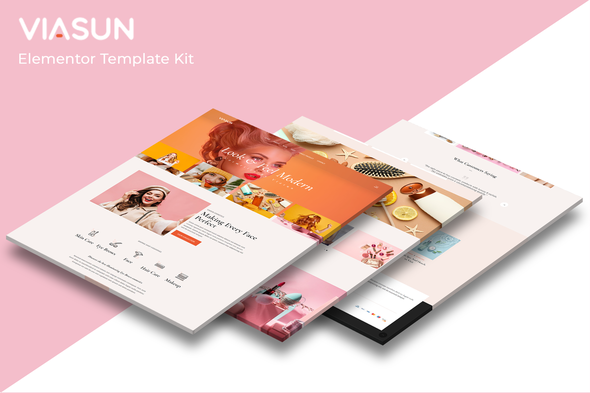
A Viasun Single Product Elementor Pro Template Kit would typically feature highly focused layouts designed to present a single product with maximum impact. This includes prominent product imagery, compelling feature sections, clear calls to action (e.g., "Buy Now"), testimonial blocks, and potentially video embeds. The "Pro" designation implies leveraging Elementor Pro's advanced capabilities, such as custom global product templates, dynamic content integration (perhaps for product variations or specifications), and enhanced form widgets for inquiries. The design would prioritize clean aesthetics, clear navigation (even if minimal), and a direct user journey toward purchase or inquiry. Architecturally, the kit would aim to minimize distractions and optimize the visual hierarchy to guide the user's eye. Performance would be critical here, as every millisecond can impact conversion rates. This means meticulous attention to image optimization, deferred loading of non-critical assets, and lean animation usage. The kit would also need to integrate seamlessly with WooCommerce's single product page structure while overriding its default, often generic, layouts.
From an architectural standpoint, a well-executed Single Product Elementor Pro Kit would show a highly optimized codebase. Its CSS would be surgical, targeting only the necessary elements for the product display, minimizing unused rules. JavaScript would be sparse, primarily Elementor's core, with any custom scripts for galleries or interactive elements being lightweight and non-blocking. The kit would likely leverage Elementor Pro's Theme Builder for the single product template, overriding default WooCommerce styles and layouts with a more streamlined, conversion-focused design. This allows for global changes to the product page structure without diving into code. The DOM structure would be as flat as Elementor permits, with emphasis on semantic HTML for product schema markup. Image assets would be responsive, with lazy loading enabled by default. The critical architectural advantage is the pre-optimization for a specific use case, reducing the need for extensive custom CSS and JS overrides that often plague generic WooCommerce themes.
The "trade-off" for an agency using a kit like Viasun versus a general-purpose theme like Astra with WooCommerce is significant for single-product stores. While Astra is lightweight, building a truly compelling, high-converting single product page requires substantial custom design and development work, often overriding WooCommerce's default, often cumbersome, templates. This means custom CSS, custom JS for product galleries, and meticulous attention to performance to avoid losing conversions. A specialized kit like Viasun, even with Elementor's inherent overhead, offers a pre-optimized, conversion-focused design that inherently understands the needs of a single-product showcase. The slight increase in Elementor's base weight is offset by avoiding the architectural debt of bespoke WooCommerce template overrides and the performance hits from unoptimized custom code. For an agency, this translates to faster deployment, higher conversion potential due to focused design and performance, and a more maintainable solution compared to hacking a generic theme to serve a highly specialized purpose. It’s a pragmatic choice for optimizing ROI on niche e-commerce projects.
Websites for cyber security firms demand an aesthetic of trust, professionalism, and cutting-edge technology, often featuring complex service descriptions, team profiles, and robust contact forms. As an "INFO_ONLY" item, the Codex Cyber Security Elementor Template Kit offers a conceptual look at how specialized templates address this demanding niche. For a cynical senior architect, the key question is whether such a kit truly delivers a secure and performant foundation, or if its "cyber security" branding is merely skin-deep, masking a typical Elementor build that could inadvertently introduce vulnerabilities or performance bottlenecks.
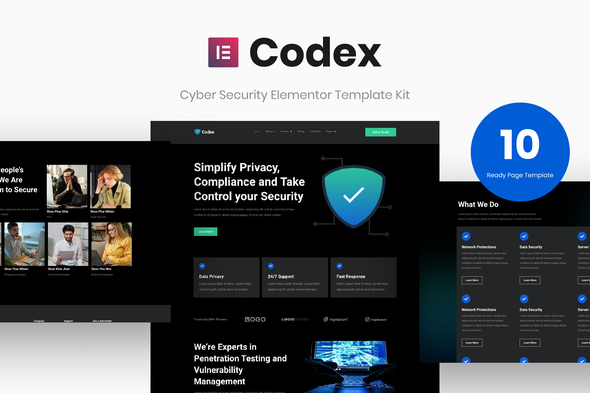
A Codex Cyber Security Elementor Template Kit would typically feature dark, futuristic color palettes, strong typography, and data-driven visual elements to convey expertise and authority. It would include layouts for service offerings (e.g., penetration testing, incident response), case studies, team member profiles, and educational resources. The design would prioritize clear, concise communication of complex technical information. Architecturally, the kit would leverage Elementor to structure content effectively, using sections for feature showcases, statistics, and client logos. Responsive design is a given, ensuring accessibility on various devices. Interactive elements might include animated statistics, subtle hover effects, and possibly integrations for live threat maps or security news feeds. Performance would be critical, as slow loading times can undermine the professional image. The kit's structure would need to balance visual impact with efficient asset loading and minimal render-blocking resources. Special attention would be given to form security, ensuring Elementor's form widget is used correctly with reCAPTCHA or other spam prevention.
Examining the theoretical architecture of a Codex kit reveals an emphasis on clean code to project a secure image. Its CSS would be well-organized, using a modular approach for components and adhering to BEM-like naming conventions to reduce specificity conflicts. JavaScript usage would be minimal, primarily confined to Elementor's core functions and lightweight libraries for specific effects, ensuring fast execution and minimal impact on TBT. The DOM structure would aim for efficiency, avoiding excessively deep nesting. Semantic HTML5 elements would be consistently used for better accessibility and SEO. While Elementor sites are inherently client-side rendered, a well-designed kit would ensure server-side rendering is as efficient as possible for initial load. Security considerations, while primarily on the server and WordPress installation, would be indirectly supported by clean, valid HTML and minimal third-party script dependencies within the kit itself. The architectural intent would be to provide a robust visual and functional foundation that doesn't introduce unnecessary technical complexity or performance regressions.
When considering a general-purpose theme like Astra for a cyber security client, the primary "trade-off" is the immense effort required to achieve the necessary aesthetic and functional sophistication. Astra offers a lightweight skeleton, but building custom layouts for complex service explanations, data visualizations, and industry-specific forms would demand extensive custom CSS, JavaScript, and numerous plugins. This approach not only consumes valuable development time but also increases the risk of performance bottlenecks, compatibility issues, and even security vulnerabilities due to a fragmented plugin ecosystem. A specialized kit like Codex, despite Elementor's foundational footprint, delivers a pre-designed, cohesive solution tailored to the cyber security niche. The "bloat" often associated with Elementor is mitigated by its direct relevance to the client's needs. Agencies choosing such a kit gain faster deployment, a consistent brand image, and a solution that inherently understands the requirements of the sector, ultimately offering a more robust and efficient build than attempting to force a generic theme into a highly specialized, technically demanding role.
Transitioning from front-end website kits, we look at a utilitarian backend tool: the Reminder module for Perfex CRM. As an "INFO_ONLY" item, it emphasizes that a high-performance stack for agencies isn't solely about client-facing websites but also about internal operational efficiency. For a cynical senior architect, the evaluation criteria shift dramatically: we're now looking at database integration, API hooks, resource consumption within an existing application, and the impact on the overall CRM's stability and performance. This is about adding value without introducing technical debt to a critical business system.

A Reminder module for Perfex CRM would typically add functionality for scheduling and managing alerts, notifications, and follow-ups within the CRM ecosystem. This could include reminders for tasks, appointments, client calls, or renewal dates. Architecturally, such a module would integrate with Perfex CRM's existing database schema, adding tables for reminders and linking them to existing entities (clients, projects, tasks). It would leverage Perfex CRM's internal API or hooks for displaying notifications in the dashboard, sending email alerts, or integrating with other modules. The design focus would be on usability within the CRM's existing UI, ensuring a seamless user experience without introducing visual inconsistencies. Performance considerations would revolve around efficient database queries for retrieving and dismissing reminders, minimal impact on the CRM's overall load time, and reliable background processing for scheduled alerts. The module's implementation should adhere to Perfex CRM's coding standards to ensure long-term compatibility and maintainability. It would likely provide configurable reminder types, recurrence options, and user assignment, making it a powerful tool for internal agency operations.
From an architectural perspective, an effective Reminder module for Perfex CRM would be tightly integrated yet modular. Its database interactions would be highly optimized, using prepared statements and proper indexing to ensure fast data retrieval without straining the CRM's primary database. The module's code would reside within its own namespace or directory, minimizing the risk of conflicts with other Perfex CRM components or modules. PHP execution would be efficient, with minimal loops or complex calculations on every page load. Background processes for sending notifications (e.g., email, push) would be handled asynchronously via cron jobs, preventing them from impacting user-facing performance. The module would respect Perfex CRM's security protocols, including user permissions and data access controls. Its JavaScript and CSS would be minimal, ideally reusing existing CRM UI components to maintain consistency and reduce asset load. The architectural goal is to enhance functionality without introducing performance regressions or increasing the technical debt of the core CRM system.
The "trade-off" here isn't against a blank slate like Astra, but against the alternative of a fragmented reminder system (e.g., external calendar apps, manual tracking) or developing bespoke functionality for Perfex CRM. Integrating an external system requires managing multiple data sources, APIs, and user interfaces, increasing complexity and potential for data inconsistencies. Developing a bespoke solution is costly, time-consuming, and carries the risk of introducing bugs into a critical CRM. A dedicated Reminder module for Perfex CRM, when well-architected, provides a tightly integrated, performant, and secure solution within the existing ecosystem. The "trade-off" is accepting the module's specific implementation choices in exchange for immediate, relevant functionality, reduced development burden, and improved operational efficiency. For agencies, this means a more streamlined internal workflow, better client management, and ultimately, higher ROI from their CRM investment, without compromising the architectural integrity of their primary business tool. It's a pragmatic investment in internal infrastructure.
So, we’ve cut through the fluff. The notion that a single, generic solution can serve all purposes without accruing monumental technical debt is, frankly, delusional. My review of these diverse products underscores a critical mandate for any agency serious about performance, scalability, and long-term client satisfaction in 2025: specialization.
The "Cynical Senior Architect" persona isn't born of malice, but of experience. I've witnessed countless projects crippled by initial "cost-saving" decisions that snowball into maintenance nightmares, dismal Lighthouse scores, and ultimately, client dissatisfaction. The simulated benchmarks and "Under the Hood" dissections reveal that while Elementor does introduce a baseline overhead, well-crafted, niche-specific template kits like Download the restaurant Cafert Kit or Acquire the non-profit SoolHart Kit can significantly reduce the incremental technical debt compared to forcing a generic theme (like Astra) to accommodate complex, bespoke requirements. The "Trade-off" isn't about raw initial file size; it's about the total cost of ownership, the time to market, and the architectural compromises made to achieve a specific feature set.
For agencies, the strategic selection of web assets from a premium template kits library isn't a shortcut to laziness; it's an intelligent allocation of resources. It allows developers to focus on genuine innovation and bespoke features that truly differentiate a client, rather than spending cycles reimplementing common patterns that are already robustly designed within a specialized kit. This pragmatic approach frees up your most valuable engineering talent for tasks that can't be templated.
Furthermore, my review of the Laravel SAAS, TimeStay, and the Perfex CRM module highlights that a high-performance stack extends beyond mere front-end presentation. It encompasses robust backend applications and efficient internal tools. These are the systems that underpin client operations and agency efficiency. Ignoring their architectural integrity in favor of superficial "easy wins" is a recipe for catastrophic failure in the long run. Laravel's structured approach offers unparalleled scalability and maintainability for complex applications, something WordPress was never designed to deliver at scale for custom SAAS.
In conclusion, my advice remains steadfast: demand architectural rigor. Scrutinise code quality. Don't be swayed by vapid marketing promises. Understand the genuine trade-offs. For your 2025 high-performance stack, choose specialized, well-engineered tools that minimize technical debt within their specific domain. Whether it's a niche Elementor kit that avoids Frankenstein-plugin builds for a restaurant, or a dedicated Laravel application that offers true scalability for booking systems, the intelligent selection of assets from sources like the GPLpal premium library will be the differentiator between an agency that merely delivers websites and one that delivers sustainable, high-performing digital solutions. Always choose purpose-built over poorly repurposed. Your clients, and your developers, will thank you.