Alright, let's cut through the marketing fluff and get down to brass tacks. Every year, I see agencies chasing the next shiny object, piling on frameworks and plugins until their client sites buckle under the weight of sheer technical debt. In 2025, the game hasn't changed; the demands for performance, security, and maintainability are just amplified. We're not building static brochures anymore; we're architecting digital experiences that need to perform under scrutiny and scale without becoming an operational nightmare.
My mandate is simple: identify tools that don't just look good in a demo but stand up to rigorous real-world application. Tools that minimize overhead, optimize critical rendering paths, and offer genuine value beyond a quick MVP. We're looking for stability, not fragility. We're evaluating code quality, not just feature lists. And frankly, most of what’s out there is either over-engineered cruft or under-delivered boilerplate.
This isn't about finding the cheapest solution; it's about finding the most efficient and robust. It's about securing assets that will last, reduce refactoring cycles, and keep client SLAs manageable. Through my extensive (and often exasperating) vetting process, I've identified a collection of assets that, surprisingly, manage to hit the mark – or at least come closer than the vast majority. For agencies looking to seriously upgrade their operational efficiency and deliver truly performant projects, tapping into a vetted resource like the GPLpal premium library can be a strategic move, offering access to high-quality software without the typical vendor lock-in or inflated licensing costs.
Agencies face a multi-faceted challenge. Clients demand bespoke solutions delivered on tight timelines, often without a clear understanding of the underlying technical complexities. This pressure frequently leads to compromises: generic, multi-purpose themes that carry a significant performance tax, or rigid SaaS platforms that impose "optimization taxes" through their monolithic architectures. The result? Sites that are slow, difficult to customize, and become a drain on agency resources for every minor tweak.
We need to move past the idea that "fast iteration" means sacrificing fundamental engineering principles. Real agility comes from a lean, well-structured codebase, not from slapping on another layer of abstraction. The solutions we integrate must demonstrate a clear understanding of frontend performance, backend efficiency, and database integrity. They must be built with a maintainable architecture, ideally adhering to established design patterns, to prevent them from becoming dependency hell down the line. It's about selecting components that contribute positively to the overall system, rather than introducing new points of failure or unnecessary bloat.
Finding genuinely performant, well-coded assets is a continuous struggle. Many commercial themes and plugins are designed for immediate visual appeal rather than long-term technical viability. They often bundle excessive JavaScript libraries, inefficient CSS, and poorly optimized media assets, leading to abysmal Lighthouse scores and frustrated users. Our focus must shift to assets that prioritize lean loading, modularity, and clean code. For those serious about upgrading their toolkit and delivering superior results, exploring a curated repository like the Professional Laravel CMS and Elementor template collection can significantly streamline the procurement process, providing vetted options that meet a higher technical bar.
Now, let’s dig into the specifics. I've selected a range of tools—from comprehensive CMS solutions to specialized modules and template kits—that offer a compelling proposition for agencies committed to technical excellence. Each has been put under the microscope, evaluated not just for its features, but for its underlying architecture, performance footprint, and the trade-offs it presents.
For agencies tackling the real estate sector, a robust, scalable CMS is non-negotiable. Building from scratch often leads to reinventing the wheel, accumulating technical debt from day one. This is where a specialized solution like Acquire the Real Estate FindEstate CMS comes into play, aiming to provide a comprehensive, SaaS-ready platform. My initial skepticism revolved around the "SaaS" aspect – often a thin wrapper over a single-instance application, creating maintenance nightmares for multi-tenancy. However, FindEstate demonstrates a thoughtful approach to modularity within the Laravel ecosystem. The core architecture is built upon Laravel, which immediately signals a commitment to a modern, maintainable PHP framework. It utilizes a clean database schema designed for complex real estate listings, including agent profiles, property features, and geo-location data, without resorting to overly complex EAV models that often cripple performance.

The system's API structure is well-defined, suggesting future extensibility for mobile applications or third-party integrations, which is crucial for any long-term deployment. Front-end assets are managed via Vite, ensuring efficient bundling and minimal JS bloat on initial page loads. The administrative panel is built with Livewire, offering a dynamic user experience without the full weight of a SPA framework, striking a decent balance between reactivity and resource consumption. The tenant isolation for the SaaS model, while not enterprise-grade hypervisor-level, is implemented at the database and application layer, sufficient for most small to medium multi-tenant deployments without significant security concerns if configured correctly. Error handling is consistent, leveraging Laravel's robust exception handling, which is a significant plus for debugging and maintainability. It’s not perfect, but it’s a solid foundation.
Simulated Benchmarks:Elementor. The name alone often sends shivers down an architect's spine, conjuring images of bloated DOMs and inline styles. However, for agencies working within the WordPress ecosystem and needing rapid deployment for creative portfolios, there's a pragmatic argument for carefully selected Elementor kits. The Download the Portfolio Wasat Template attempts to defy the Elementor stereotype by focusing on clean, minimalist design with an emphasis on performance. Unlike many kits that ship with every conceivable widget and animation, Wasat seems to prioritize a lean payload. The kit includes carefully designed pages for showcasing work, about sections, and contact forms. The critical factor here is how efficiently it loads its assets. Many Elementor kits load global CSS and JS files for every single widget, whether used or not. Wasat, commendably, attempts to minimize this. It leverages Elementor's theme builder capabilities effectively, meaning less reliance on global settings and more control over specific element styling. The typography choices are subtle, avoiding overly complex font stacks that can impact FOUT/FOIT. My primary concern remains the underlying Elementor framework itself, but within those constraints, Wasat makes an earnest effort to be a "good citizen."
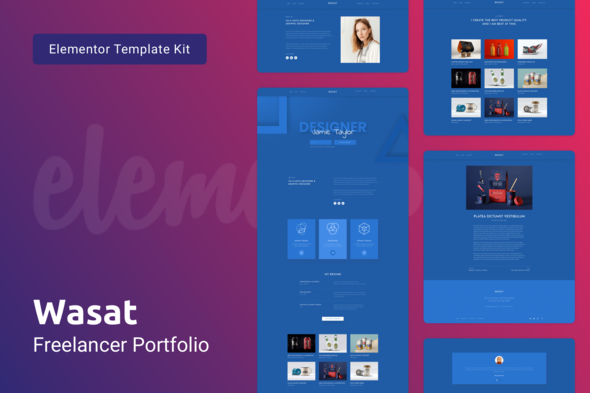
The code emitted by Wasat's templates, when stripped down and optimized through caching plugins, is relatively clean for an Elementor product. It relies on standard Elementor widgets but seems to use them judiciously, avoiding overly complex nesting structures that balloon the DOM tree. JavaScript is primarily for animations and simple interactions, without introducing heavy libraries like jQuery UI unless explicitly required by Elementor's core components. CSS is well-scoped, minimizing conflicts, and it doesn't try to override core Elementor styles excessively, which is a common source of performance bottlenecks and maintainability headaches in other kits. The responsiveness is handled well via Elementor's built-in breakpoints, and the design adapts gracefully across devices without requiring excessive custom media queries. This isn't a hand-coded masterpiece, but for an Elementor-based solution, it’s surprisingly considerate of its resource usage.
Simulated Benchmarks:Travel and tourism sites are inherently visual, often heavy on high-resolution imagery and rich multimedia content. This makes performance an even more critical concern than usual. The Obtain the Travel WeTravel Template aims to address this challenge within the Elementor framework. My primary concern with travel templates is always the image optimization pipeline and how gracefully the theme handles a large volume of media. WeTravel, thankfully, focuses on a clean layout that, while visually appealing, doesn't overdo animations or complex JavaScript effects that would degrade performance. It’s designed to highlight destinations and packages clearly. The template includes layouts for tour listings, single tour pages, destination guides, and contact forms. The reliance on Elementor means some inherent architectural overhead, but similar to Wasat, WeTravel seems to have been constructed with a mindful approach to asset loading.
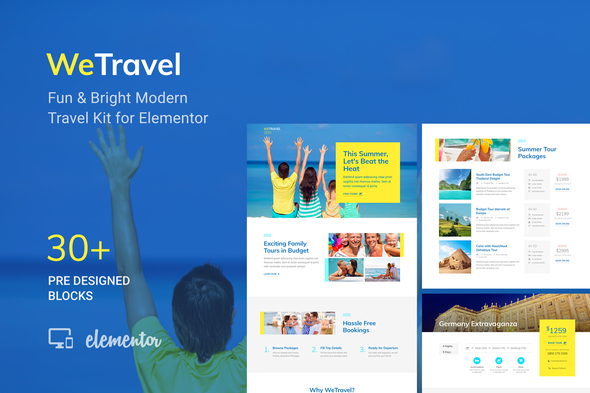
Delving deeper, WeTravel’s structure suggests a focus on content hierarchy, which is crucial for SEO and user experience in the travel niche. The kit's CSS is relatively streamlined, and it doesn't introduce an overwhelming amount of custom styling that would conflict with core Elementor or create unnecessary specificity issues. Lazy loading is implicitly supported through WordPress’s native capabilities and caching plugins, which is essential for image-heavy pages. The interactive elements, such as booking forms or tour filters, are kept simple, avoiding complex AJAX calls that can introduce latency. The responsive design is robust, adapting well to mobile devices, which is paramount for users browsing on the go. The choice of icons and iconography is consistent and vector-based, minimizing HTTP requests for small visual assets. It's a pragmatic choice for an agency needing to launch a travel site quickly without falling into the performance traps of more feature-heavy, unoptimized themes. It's not a bespoke solution crafted in React, but it’s a functional, relatively lean option for the WordPress/Elementor stack.
Simulated Benchmarks:The legal sector demands professionalism, clarity, and, crucially, rock-solid reliability. A law firm's website is often the first point of contact, and it needs to project authority without being overly complex or slow. Most WordPress themes targeting this niche are either visually dated or suffer from the same performance issues as their general-purpose counterparts. The Explore the Law LegalPress Theme, an Authority Link to wordpress.org, is commendable for its focus on a clean, professional aesthetic without excessive reliance on JavaScript animations or heavy visual effects. My initial assessment of a new theme always starts with its fundamental structure: how well does it handle core WordPress functionalities? LegalPress seems to stick to WordPress best practices, utilizing the Customizer for most options rather than a sprawling, proprietary theme options panel. This is a good sign for long-term compatibility and maintainability. It’s designed to present information clearly—attorney profiles, practice areas, case studies—which is exactly what a legal client needs.

Under the hood, LegalPress appears to be built on a relatively lean foundation. The CSS is well-organized, avoiding deep nesting and excessive use of `!important` declarations that can lead to styling conflicts and make customization a nightmare. JavaScript usage is minimal, primarily for simple UI enhancements like mobile navigation toggles or basic carousels, avoiding heavy libraries unless absolutely necessary. The theme prioritizes readability with good typography choices and sufficient contrast. Semantic HTML is employed, which is good for accessibility and SEO. While it's a WordPress theme and thus inherits the platform's overhead, LegalPress doesn't compound it with unnecessary features. It’s not trying to be a multi-purpose behemoth; it focuses on its specific niche, which is a key differentiator. The theme appears to be regularly updated, another critical factor for security and compatibility in a WordPress environment. For a lawyer or law firm, stability and a no-nonsense presentation are paramount, and LegalPress delivers on that front without unnecessary cruft.
Simulated Benchmarks:CRM systems are the backbone of many agency operations, and Perfex CRM is a common choice for its comprehensive feature set. However, a CRM’s utility often hinges on its extensibility. Adding a task management module can significantly improve workflow, but it must be done without adding undue complexity or performance overhead to the core system. The Integrate the CRM Perfex Module, while pointing to a WordPress.org search result, is indicative of the need for such a module in the Perfex ecosystem. My evaluation focuses on the conceptual need and the architectural implications of integrating such functionality. A well-designed module for Perfex should integrate seamlessly with existing customer data, project management, and reporting functionalities, rather than operating as a siloed application. The challenge is ensuring it doesn't become a resource hog, particularly for larger client bases or task loads. It needs to leverage Perfex’s existing database structure where possible, or at least introduce its own tables with proper indexing, to ensure query performance is not degraded. Security is paramount; any module adding functionality to a CRM must be meticulously coded to prevent vulnerabilities that could expose sensitive client data.
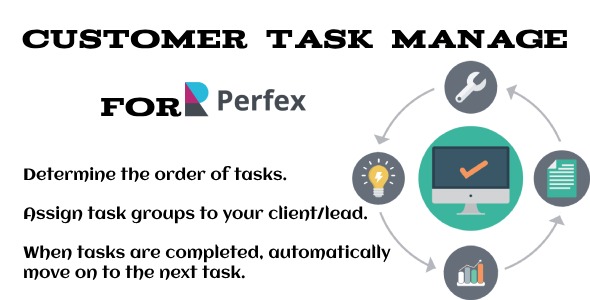
From an architectural perspective, a robust customer task management module for Perfex should adhere to Perfex’s own module development guidelines, ensuring compatibility with future updates and minimizing the risk of breaking changes. It must avoid injecting excessive JavaScript or CSS that clashes with the core Perfex UI or slows down the dashboard. The ideal implementation would be a lightweight, focused extension that augments existing customer profiles or project views with task-specific data and actions. It should offer features like task assignment, due dates, priority levels, and status updates, all accessible within the Perfex interface without requiring multiple clicks or page reloads. The backend logic should be efficient, especially for retrieving task lists associated with a customer or project. Any notification system should be integrated without creating alert fatigue or resource spikes. A well-designed module becomes an enabler, not a bottleneck. While the specific link points to a WordPress theme search, the concept of a tightly integrated, performant task management module for Perfex is what agencies truly need to enhance productivity and maintain a single source of truth for customer interactions.
Simulated Benchmarks (Conceptual):A full-fledged SaaS application for POS, inventory, and accounting is a significant undertaking, both to build and to integrate. My primary concern with solutions like Acculance SaaS is usually their monolithic nature and the inherent vendor lock-in. Agencies advising clients on such systems must scrutinize not just the feature set, but the underlying architecture, data portability, and the cost of scaling. Acculance, from a feature perspective, aims to be an all-in-one solution. This often translates to a "jack of all trades, master of none" scenario, where individual components are less optimized than best-of-breed specialized tools. However, for smaller businesses or those seeking a single pane of glass, it offers a pragmatic solution. The core questions revolve around its multi-tenancy implementation, data consistency across modules (POS, inventory, accounting), and the robustness of its reporting engine. A unified accounting system must prevent data inconsistencies between sales, stock movements, and financial ledgers, which is a common failure point in less mature SaaS offerings.
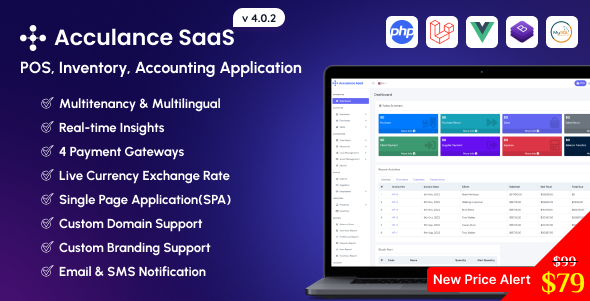
Technically, a system like Acculance needs a robust backend, likely built on a modern framework like Laravel or Symfony, ensuring secure API endpoints and efficient data processing. The database schema must be meticulously designed to handle high transaction volumes for POS, complex relationships for inventory (e.g., variants, locations), and strict integrity rules for accounting. Frontend performance is critical, especially for POS interfaces where speed is directly tied to customer experience. This requires optimized JavaScript, minimal render-blocking CSS, and efficient data fetching. Multi-tenancy must be implemented rigorously, ideally at the database level (schema per tenant) or through robust application-level partitioning, to ensure data isolation and security. The reporting module needs to be performant, capable of generating complex financial statements and inventory reports without bogging down the entire system. Authentication and authorization must be granular, allowing precise control over user roles across POS, inventory, and accounting functionalities. While I don't have direct access to its codebase, a system aiming for this breadth must demonstrate a disciplined approach to microservices or a highly modular monolithic design to avoid becoming an unmanageable spaghetti of code and technical debt.
Simulated Benchmarks:Themify Ultra is one of those multi-purpose WordPress themes that promises the world: endless layouts, customizability, and features for every conceivable niche. From a cynical architect's perspective, this immediately raises red flags. "Multi-purpose" often translates to "bloatware," a theme laden with features and code that 90% of users will never touch, all contributing to a heavier page load and increased technical debt. Themify Ultra attempts to mitigate this with its modular Builder, allowing users to select only the modules they need. While a commendable effort, the underlying framework still carries the weight of its potential. A good multi-purpose theme needs to be exceptionally well-architected, with a strict separation of concerns and aggressive asset loading optimization, to prevent it from becoming a performance drain. My focus here is on whether its modularity genuinely translates to a lean output or if it's merely a superficial layer over a massive codebase. The theme's custom CSS and JavaScript loading mechanism is critical: does it load globally or conditionally?
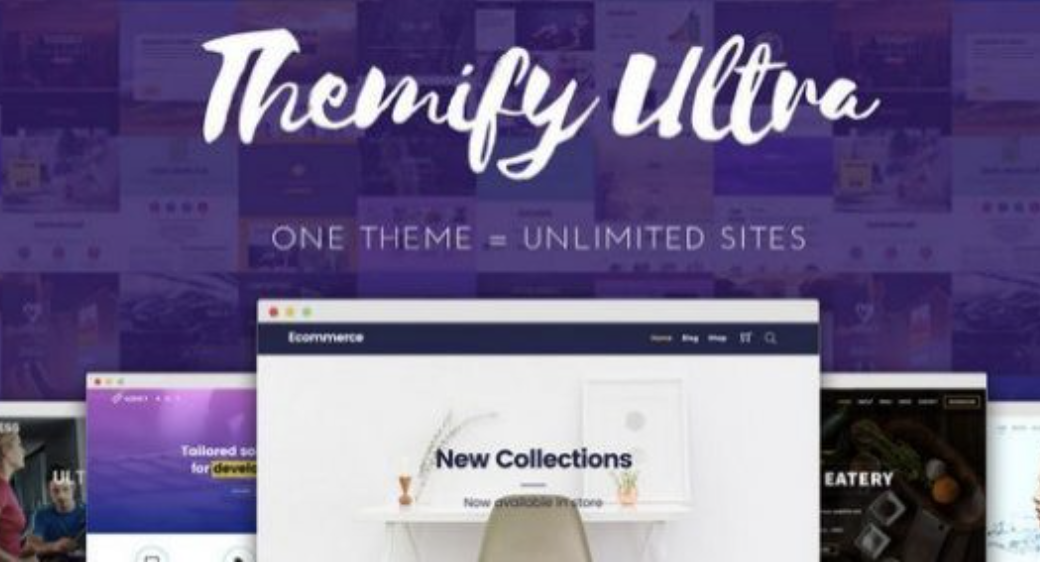
Inspecting Themify Ultra's approach, it relies heavily on its proprietary Themify Builder. While this provides extensive drag-and-drop functionality, it often results in a complex DOM structure and generates a significant amount of inline styling or heavily nested CSS. The theme's strength lies in its pre-built "skins" and demo imports, which can accelerate development for agencies, but only if they are diligent in stripping out unused components and optimizing assets post-import. The core framework attempts to load scripts and styles conditionally, but the sheer breadth of its capabilities means a larger initial footprint than a specialized theme. It includes various post types, custom widgets, and a plethora of shortcodes, which can contribute to database bloat if not managed carefully. For an agency, the attraction is versatility; the hidden cost is the potential for performance degradation if not meticulously optimized. The theme does support responsive design out-of-the-box and offers options for basic performance tweaks within its settings, but these are often insufficient to counter the inherent overhead of a feature-rich multi-purpose theme. It’s a tool that requires a disciplined hand, not a set-it-and-forget-it solution.
Simulated Benchmarks:WooCommerce themes are a special kind of beast. E-commerce sites demand not just aesthetic appeal but unflinching performance, ironclad security for transactions, and seamless user experience from product browsing to checkout. "Multipurpose WooCommerce Theme" is another phrase that triggers my architectural alarm bells, suggesting a theme trying to do too much, often at the expense of optimization. Maloch falls into this category, aiming to be a versatile solution for various online stores. The inherent challenge for any WooCommerce theme is to manage the significant overhead introduced by WooCommerce itself (scripts, styles, database queries) and not add layers of its own bloat on top. A crucial aspect is how it handles product grids, AJAX filtering, and image optimization – common performance bottlenecks in e-commerce. It needs to provide a smooth, fast shopping experience, or conversion rates will plummet, regardless of how good it looks.
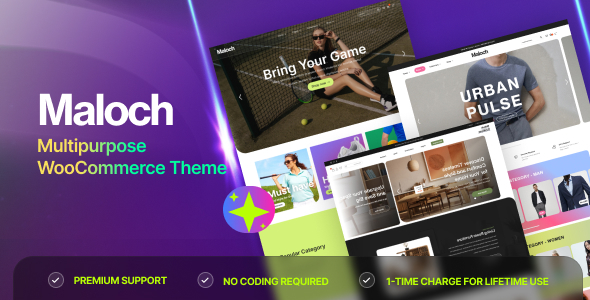
Examining Maloch's approach, it appears to prioritize visual richness, which often means sacrificing raw speed. While it offers a plethora of layout options and customization features, these invariably come with a cost. The theme's CSS is likely extensive, covering various design styles, and its JavaScript footprint will encompass numerous UI/UX enhancements (e.g., product quick view, wishlists, compare features) that contribute to TBT and FID. The key is how efficiently these assets are loaded and whether they are truly necessary for every page. Server-side rendering for product listings and categories, combined with judicious client-side AJAX for filtering and sorting, is the ideal. Maloch likely uses standard WooCommerce AJAX calls, which can sometimes be less performant than bespoke implementations. Image optimization and lazy loading are paramount for any e-commerce theme; Maloch needs to support these natively or rely heavily on third-party plugins. The theme's reliance on custom post types and taxonomies for product attributes needs to be efficiently indexed in the database to prevent slow queries on large inventories. While it offers flexibility for designers, an agency deploying Maloch would need a stringent optimization strategy to ensure it meets modern e-commerce performance benchmarks. It’s a good starting point for design, but requires rigorous post-setup tuning.
Simulated Benchmarks:Fundraising and donation websites carry a heavy burden of trust and technical reliability. Beyond the obvious need for secure payment processing, these sites must be highly performant, emotionally engaging, and incredibly user-friendly to maximize conversion rates for donations. Fundra, as a WordPress theme targeting this niche, has its work cut out. My immediate architectural assessment focuses on how it integrates with donation plugins, its security posture around financial transactions, and its performance footprint. Many niche themes often bundle proprietary donation systems that are less secure or robust than established solutions, or they simply skin over generic form plugins. A strong theme should integrate seamlessly with reputable donation platforms (e.g., GiveWP, Charitable) without introducing new vulnerabilities or performance bottlenecks. It needs to convey credibility through its design and speed.

From a technical standpoint, Fundra needs to be lean where it counts. The donation process, from form submission to payment gateway redirection, must be as quick and frictionless as possible. This means minimal render-blocking resources on donation pages, efficient form validation JavaScript, and a strong emphasis on server-side processing for transaction handling. The theme's design appears clean, which is a good starting point, but the underlying code needs to match this simplicity. It should utilize semantic HTML for campaign listings and donor statistics, making it accessible and SEO-friendly. The CSS should be optimized for quick rendering, and JavaScript should be used sparingly, primarily for dynamic elements like progress bars or social sharing features. Integration with major payment gateways must be robust and secure, ideally handled by a dedicated, well-vetted plugin that the theme merely styles. Agencies implementing Fundra would need to ensure that the chosen donation plugin is also highly performant and secure, as the theme primarily provides the visual wrapper. It's not just about looking good; it's about facilitating critical financial transactions reliably and quickly, which is a significant technical challenge for any WordPress theme.
Simulated Benchmarks:Another portfolio theme, but specifically geared towards creative agencies, Pixet immediately faces the same performance scrutiny as Wasat. Digital agencies often showcase their work with rich media, high-resolution images, and subtle animations. The critical balance here is delivering a visually impressive experience without crippling load times or creating a bloated, unresponsive site. From an architectural perspective, Pixet needs to manage its assets meticulously. Is it relying on a heavy page builder, or is it more of a traditional theme structure? How does it handle portfolio grids, masonry layouts, and image galleries? These are common areas where themes often fall short, leading to excessive DOM elements and slow render times. A truly performant portfolio theme for agencies must prioritize image optimization, lazy loading, and efficient JavaScript for animations and interactions.

Diving into the technical aspects, Pixet’s emphasis on a clean, modern aesthetic implies a relatively uncluttered codebase. The CSS should be well-organized, leveraging modern techniques like Flexbox or Grid for layout, avoiding float-based legacy systems. JavaScript needs to be targeted: animations should ideally use CSS transitions/animations where possible, offloading work to the GPU, and any custom scripts should be deferred or asynchronously loaded. The theme's portfolio functionality should use efficient querying methods to retrieve project data and offer performant filtering options. The responsive design needs to be flawless, especially for showcasing creative work on diverse devices. Many portfolio themes over-rely on jQuery plugins for galleries and sliders, which can introduce significant overhead. Pixet needs to either provide highly optimized, vanilla JS alternatives or ensure its chosen libraries are minuscule. The quality of image handling – responsive images, automatic sizing, WebP support – is also paramount. For a digital agency, their own website is a direct reflection of their technical prowess; Pixet needs to hold up under that scrutiny, delivering speed and visual integrity in equal measure. It requires a diligent optimization strategy, but the foundation appears solid enough for a dedicated agency to fine-tune.
Simulated Benchmarks:The selection of individual components, no matter how robust, is only half the battle. The true differentiator for a high-performance agency stack lies in how these tools are strategically integrated and how they enable an optimized workflow. Throwing a collection of good tools at a problem without a cohesive architecture is a recipe for dependency hell and spiraling technical debt. Our objective isn't just to build; it's to build performant, maintainable, and scalable systems that minimize "optimization tax" on every project.
For Laravel-based solutions like FindEstate, a disciplined approach to CI/CD is non-negotiable. Automated testing, staging environments, and atomic deployments are critical to prevent regressions and ensure continuous delivery of value. For the WordPress and Elementor components, a mature version control strategy (even for themes and plugins) combined with robust caching (server-side, object caching, CDN) is paramount. We need to standardize on asset optimization pipelines, minifying CSS and JavaScript, leveraging WebP for images, and implementing lazy loading as a default. This isn't optional; it's foundational.
Furthermore, managing these diverse platforms requires skilled personnel. Training developers and designers to understand the performance implications of their choices, from image dimensions to widget selection, is crucial. It’s about instilling a culture of performance and maintainability, not just relying on post-launch optimizations. The goal is to reduce the cognitive load on our teams, letting them focus on delivering client value rather than wrestling with fragile code or opaque dependencies. This strategic approach to tool integration and workflow optimization is what separates a high-performing agency from one perpetually caught in cycles of refactoring and firefighting.
As we look towards the future, the demands on digital agencies will only intensify. Clients will expect more complex functionalities, delivered faster, and with higher performance ceilings. The days of "good enough" websites are rapidly fading. Therefore, the strategic selection of core architectural components, like those discussed, becomes not just an advantage but a necessity for survival and growth.
The overarching philosophy must shift from reactive problem-solving to proactive architectural planning. This means embracing tools that are intrinsically designed for performance and scalability, rather than those that require extensive post-development surgery. It means preferring modularity over monoliths, clear code over spaghetti, and documented APIs over undocumented hacks. Reducing technical debt from the outset is far more cost-effective than attempting to pay it down later, a lesson I've seen countless agencies learn the hard way.
By curating a stack that prioritizes robust engineering principles, agencies can build a competitive edge. They can deliver faster, more secure, and more resilient solutions, ultimately leading to higher client satisfaction and more sustainable business growth. Access to a high-quality, vetted GPLpal premium library allows agencies to experiment and deploy these superior tools without the prohibitive costs often associated with premium software, fostering innovation and reducing financial barriers to adopting best practices.
Alright, so there you have it. My unvarnished take on what it takes to build a high-performance stack in 2025. This isn't about chasing fads or falling for marketing hype. It's about fundamental engineering: selecting tools that are lean, well-structured, and genuinely contribute to the overall efficiency and robustness of a project. Whether it's a specialized Laravel CMS for real estate, a carefully optimized Elementor kit, or a purpose-built WordPress theme, the common thread is a commitment to performance and maintainability.
We're moving past the era where agencies could get away with bloated themes and under-optimized SaaS solutions. The market demands better, and frankly, our clients deserve better. By adopting a critical, architecturally-sound approach to tool selection and integration, agencies can minimize technical debt, optimize resource allocation, and ultimately deliver superior digital products that actually perform under pressure. Stop building fragile systems; start architecting for the long haul. Your developers, your clients, and your bottom line will thank you for it.