###### tags: `CDA`
# Reading Responses (Set 2)
- Checklist for a [good reading response](https://reagle.org/joseph/zwiki/Teaching/Best_Practices/Learning/Writing_Responses.html) of 250-350 words
- [ ] Begin with a punchy start.
- [ ] Mention specific ideas, details, and examples from the text and earlier classes.
- [ ] Offer something novel that you can offer towards class participation.
- [ ] Check for writing for clarity, concision, cohesion, and coherence.
- [ ] Send to professor with “hackmd” in the subject, with URL of this page and markdown of today’s response.
## Reading responses 5 out of 5
### March 17th Tues - Finding someone and living alone
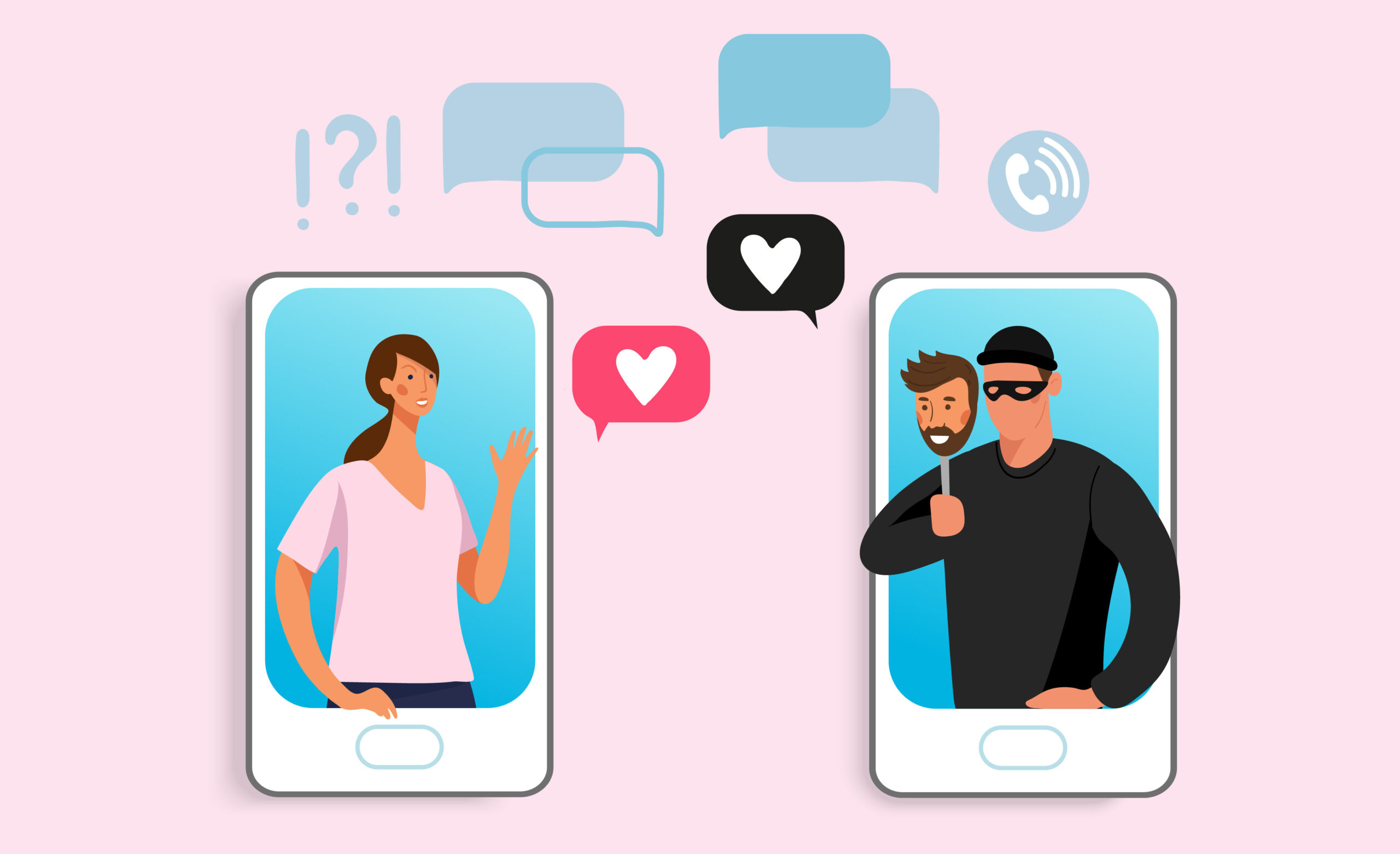
“It’s quite soul destroying” is how one user describes dating apps in The Guardian, a phrase that captures more than just frustration and emphasizes a shift in how intimacy is experienced in today’s digital age. What was once marketed as an easy path to connection now feels, for many, like an exhausting cycle of swiping left or right, ghosting, and shallow conversation.
At the core of the article is the claim that dating apps produce burnout rather than connection, a point that becomes prominent when read alongside the OkCupid Dating Blog article. While platforms like Tinder and Hinge offer choice, this choice often undermines depth as users report feeling trapped in cycles of failed matches and dry conversations. This idea aligns with what we might think of as the “commodification” of relationships, where potential partners are evaluated quickly and superficially. The findings from OkCupid deepen this critique by showing how users often misrepresent key aspects of themselves such as their height, age, and income. When taking all this into account, the “impersonal” nature of dating apps is not accidental as it is created through both app design and user behavior. Users are able to create idealized versions of themselves online for anticipated, potential partners, however this is often at the expense of one’s authenticity.
Something that I noticed in both these readings is that dating apps aren’t ineffective, it’s more so that they are incompatible with the kind of vulnerability required for meaningful relationships to form. If users are always aware of other alternative options, then connection becomes provisional. People are always trying to look for the next better option. This causes me to wonder whether or not efficiency and intimacy can coexist with one another.
Google Doc Link: https://docs.google.com/document/d/1uuab6QZ1PDL6QM11QKnhljrA4Ejyhc4oKJOvA63Z5yA/edit?tab=t.66xdqmwrjpbw
### March 20th Fri - Ads and social graph background
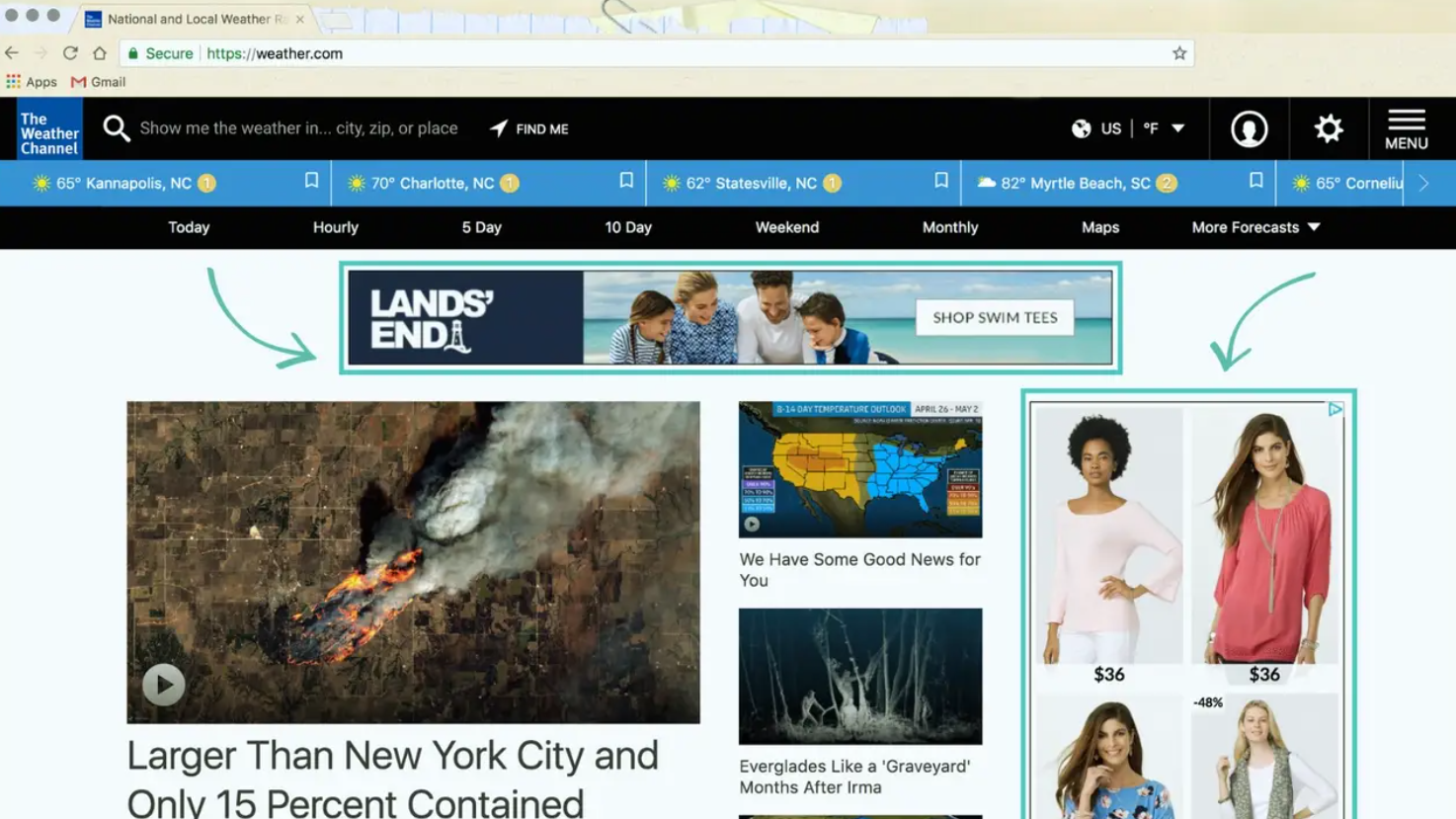
Every scroll, click, and pause online is not just reflective of our behavior – its data, and this data is what fuels modern-day advertising. The chapter by Stokes’ on online advertising builds on this idea by showing us how the current digital landscape has transformed advertising from something solely persuasive into something calculated. What may just come across as a simple ad or sponsored video could actually be part of something more complex that is designed to track behavior, predict one’s preferences, and increase user engagement.
The chapter argues that the defining feature of online advertising is its ability to track and measure user behavior in real time. Unlike traditional forms of media, digital advertising can monitor impressions, clicks, conversations associated with the content, and post-view behavior. This creates a feedback loop where campaigns are constantly being adjusted to reach maximum efficiency and reach. Nowadays, advertising isn’t just about persuading a generalized audience, it’s more about reaching the right audience at the right moment with a message that is tailored specifically for them. This also aligns with previous concepts discussed in class such as filter bubbles, which is essentially when content is filtered and delivered based on predicted user preferences. However, in the chapter we also see the limitations and unintended consequences of online advertising. The chapter mentions something known as “advertising fatigue”, which is where users become overwhelmed and begin to block ads altogether. This introduces a paradox of its own; the more targeted and optimized advertising becomes, the more users tend to resist it, which kind of surprised me. To add, many forms of advertising, such as popups, are described as intrusive by users.
Something that I found quite interesting in this reading was the extent to which online advertising is dependent on the constant surveillance of user behavior, especially in ways that the average user wouldn’t even be aware of. If advertising is driven by targeting one’s behavior and digital habits, then users (AKA us) are basically data points being constantly analyzed. This causes me to wonder the extent to which our choices online are actually ours, and if not, are they being shaped by systems designed to predict and influence our behavior?
Google doc link: https://docs.google.com/document/d/1uuab6QZ1PDL6QM11QKnhljrA4Ejyhc4oKJOvA63Z5yA/edit?tab=t.66xdqmwrjpbw
### March 24th Tues - Manipulated
If everything can be rated, ranked, and reviewed, how do we know that everything we see online is trustworthy and genuine? That question sits at the forefront of both readings. It’s quite disheartening to realize that the systems and platforms we rely on for decision-making are actually deeply unstable and not reliable as we believe them to be.
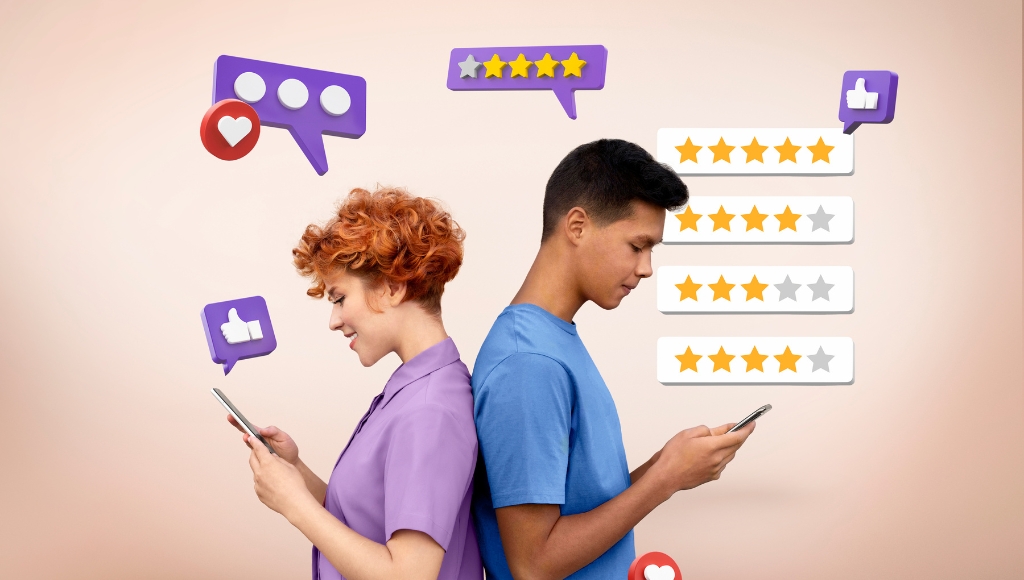
The MIT Press reading by Joseph Reagle argues that online comments and reviews are not forms of feedback but actually part of a broader system of quantification, where subjective experiences are reduced to mere metrics such as stars and likes. These metrics are not reflective of value, instead they produce value by positioning people and products within a competitive hierarchical system. When looking at reviews through this perspective, they are never unbiased and neutral. Moreover, the article published by The Seattle Times further complicates this system by exposing just how easily everything can be manipulated online. The article describes the industry built entirely around false reviews, where businesses pay thousands for fabricated five star ratings just to boost their reputation online. Even with new regulations that have made posting fake reviews illegal, enforcement of this is difficult, as these systems are adaptive.
Quantification promises us clarity and efficiency as numbers feel objective and easy to interpret. Yet, the abundance of fake reviews show how fragile this system actually is. If ratings can be bought or artificially inflated, their authority and trustworthiness goes down exponentially. This connects to the broader topics of trust and credibility (especially within online communities). And, rather than reducing uncertainty, digital platforms may actually be amplifying it without us even realizing.
I find it troubling to think about how and why these digital systems continue to hold such immense amounts of power despite all of this. Even though many of us are aware of all the fake reviews online, seeing a 5/5 stars will continue to influence us and our choices. This suggests how quantification is not just a tool but also a mindset. As humans, we are naturally conditioned to trust numbers, even when we know that they can be misleading.
Google doc link: https://docs.google.com/document/d/1uuab6QZ1PDL6QM11QKnhljrA4Ejyhc4oKJOvA63Z5yA/edit?tab=t.66xdqmwrjpbw
### March 27th Fri - Bemused
“WTF” may come across as a throwaway reaction, but in Chapter 7 of Reading the Comments by Professor Joseph Reagle, it becomes a way of understanding how people navigate meanings online. Firstly, the chapter introduces us to the concept of “bemusement” as a defining feature of digital communication. In a space where content is constantly being circulated across varied audiences and contexts, meanings can become undetermined and we (the users) are left trying to make sense of messages that appear out of place.
Furthermore, the chapter argues that online communication is shaped by context collapses and hypertextuality, which make meaning quite difficult to control. When we post something online, it’s rarely understood in its original context that we intended it to be understood in. Instead, it travels across networks where different audiences interpret it based on their own perspectives. For example, Louis C.K.’s tweets show this clearly – what he meant as a simple compliment ended up being interpreted as a political statement because it was pulled into a larger conversation that he didn’t even know he was a part of. The fact that meaning online is not determined by intent but by interpretation is unsettling. That being said, the chapter also highlights the common responses people give when this happens (to them), such as “I was hacked”, which functions less as a claim and more as a set standard for distancing oneself from their own controversial content. Similarly, many also respond with humor through the use of memes, further blurring the lines between genuineness and performativity.
Lastly, something I found interesting about this chapter was how it reframes confusion as a structural feature of digital platforms rather than as a result of communication failure. The concept of bemusement suggests that users have adapted to an environment where misinterpretation is unavoidable; therefore, if meaning is always shifting and dependent on context that is very person-to-person dependent, clarity can be hard to achieve.

Google doc link: https://docs.google.com/document/d/1uuab6QZ1PDL6QM11QKnhljrA4Ejyhc4oKJOvA63Z5yA/edit?tab=t.66xdqmwrjpbw
 Sign in via Facebook
 Sign in via X(Twitter)
 Sign in via GitHub
 Sign in via Dropbox
 Sign in with Wallet
Connect another wallet
Sign in with Wallet
Connect another wallet