###### tags: `leapdao` `deora`
# ETH_CC 2020
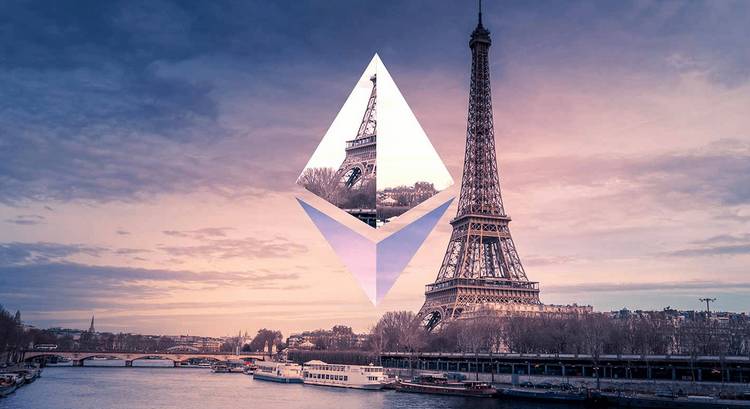
**The Ethereum Community Conference 3 // 03 - 05 March 2020 -- Paris**
Here are the collected notes from the LeapDAO & DEORA Team, enjoy!
:::spoiler Table of Contents
[TOC]
:::
## Day1 - 03/03/2020
### "The New Economic Paradigm"
**Speaker: Mel Gelderman, CEO & Founder of Monolith, UK
Track: DeFi**
Talking about DeFi & Dex's, it means a new ecosystem is emerging.
* Monolith is a mobile DeFi bank account with consumer grade experience & Monolith want to replace your current bank.
* It is a non custodial contract wallet w/ recovery options.
Monolith offers a Visa Debit card + Full DEX Access
**Upcoming features:**
* primary currency with high interest rate baked in (CHAI)
* salary paid in a stablecoin(IBAN)
* compelling UI/UX / shared profits through TKN
* access to fundamental defi services (mortgages, loans, insurance)
* complies taxes
Monolith was first company to "fiat off ramp" through the FCA's sandbox in the UK. Interacting with Visa on one hand, on the other with the ETH Network.
Monolith is part of a new economy. Everyone talks about crypto taking over. Using a alternative bank account is the firt actual step towards this vision.
But, going from 1Billion in Defi to 100Billion in DeFi - Regulation is coming...
**We have the following options:**
1. we get regulated
2. or we self-regulate
**Do we need regulation? Why?**
New industries emerge, countries adapt and mostly just go on as before. But with new technologies & opportunities, there are also new challenges.
e.g. London was polluted with industrial growth, River Themes being full with dirt & garbage...
In general, regulation means playing after the rules, keeping all participants of the market/industry on the same level of opportunities & disincentivising harmful behaviour we don't like...
Can a free market work for our industry ? Bitcoin consuming more electricity than Switzerland at the moment. Is that sustainable ?
What is the world we are building ? Yes it is decentralized, transparent, but still needs adjustment. We will figure out along the way!
**Outlined: "chapters of adoption":**
0. i can control my own assets.
1. i can hold tokens from various projects.
2. i can hold stablecoins, get compound interest, hold gold, hold real estate, collaterized loans.
3. i can get a digital identity, a mortgage, a loan, hold any asset, contribute to any movement, i can pursue my own vision.
Only we are caring about the new economy, people are not aware...one day these people will join the new economy.
Until then, and still keeping the future in mind, the main question is:
**Where should be going next?**
:end:
> *captured by Victor*
___
### "Funding ecosystem public goods"
**Speaker: Vitalik Buterin
Track: ETH 2.0**
There are 2 major questions:
1. Where to get funding?
2. How to allocate funding?
**Where to get funding?**
**Option 1:**
in-protocol - can we apply this funding model to other ecosystem needs ?
**ZEC:** Dev Fund from the beginning - 20% of block reward to dev's. Should have lasted only 4 years, was extended for another 4 years...
**BCH:** Soft Fork to get 12.5% "taxes" - many negative reactions. How the dev fund will be governed?
**Option 2:**
Donations with socially agreed defaults:
people are willingy pay 15-20% tips in restaurant...why not for public good?
EF: 1gwei per transaction to be donated?
In case of dispute: The network can be forked, to not collect the fee...
**Option 3:**
extract MEV (miner-extractable value) at layer2.
Miners generally have a way to extract revenue. block rewards & tx fee's + frontrun many DApps.
Send a tx to arbitrage when prices move. Can we exclude this ?
Reordering right is ok, but cant delay tx and no censorship possibilities. tx will go through in next block.
Optimistic & zK Rollups: separately auction off the order of tx's.
**How to allocate the funding?**
* public goods funding: small number of bureaucracies handle it.
CCCP: "Central Capital Coordinators for Public-goods"
* countries: government
* Ecosystem: EF, Consensys
* ZEC: dev fund recipients
* BCH: a Honk Kong Corporation.
**Alternatives:**
in-protocol contract author fee rebates. if you write a contract, and it is used often. The sum of tx's fees get rebated to contract author. EIP 1559 is included. Can be applied for:
* wallet contracts
* standard libraries
* weierstrudel and other algos.
**Coin Voting:**
Failed for Ethereum Coin, checking "TheDAO Fork" you need many coins, otherwise your voice is not heard. Unbalanced distribution, plutocracy?
Justin Sun colluding with Exchanges. Exchanges take the consumers coins and vote for a corrupt move.
Vitalik: That's a Bribe...Exploiting users coins for wrong decisions...
**Quadratic Voting/Quadratic Funding:**
What ? Check: [Quadratic Payments: A Primer](https://vitalik.ca/general/2019/12/07/quadratic.html)
Imagined as a central pool of funding, use it to contribute:
* gitcoin grants: better ID solution. whole funding could be done by a DAO or a smart contract
* MEV auctions in ZK and optimistic roll-ups at layer2: MEV can be higher than tx's fee's
* ETH2.0 as an opportunity to experiment with tips: redirecting 10% of own stake revenue to dev's
* continue research into other funding/distribution mechanisms: ID solutions, MolochDAO researching
* watching the situation: how much funding is actually necessary ? Is 4m or 40m sufficient?
:end:
> *captured by Victor*
___
### "Better UX through meta transactions – lessons from our experience building Universal Login"
**Speaker: Alex Van De Sande
Track: UX/UI**
We have a lot of tools. The user needs to signup to start using tools in the Ethereum space. For a better experience we should create a "Welcome Box" for the user.
* user dont want to think about tools
* public keys are confusing
* all users need a seemless signup process
* most users dont want to have a browser add on
UniLogin proposes a solution where they created a welcome box with:
* Gnosis safe
* ESN Name
* DAI (or other token)
This gives the user a single sign up process and makes every dApp easy to use.
* users do not have to install meta mask - every device becomes a keyholder.
* sign up process like in standard apps.
* user can deal with his ENS name and not with a public key.
more details and infos here: [UniLogin](https://unilogin.io/)
:end:
> *captured by Simon*
___
### "Schelling Games and the Theory of Voting Systems"
**Speaker: William George (Kleros)
Track: Cryptoeconomics**
**[Schelling Point:](https://mindyourdecisions.com/blog/2008/04/01/focal-points-or-schelling-points-how-we-naturally-organize-in-games-of-coordination/)**
In game theory, a focal point (or Schelling point) is a solution that people tend to choose by default in the absence of communication/coordination.
* Problems with plurality: Clones can make dishonest choice
* Schelling Point Disputes are binary - what if not?
* Kleros gives the options of choice within a vote, users can't setup their own options...
* Voting needs to be attack resistant:
costs of attacks should be higher than stake...
**Terms to be clarified:**
* **"Plurality"** - in this case: "majority"
* **"Borda"** - The Borda count is a family of single-winner election methods in which voters rank options or candidates in order of preference.
* **"Instant Run-off"** - ?
Question: What is honesty?
**-- Super confusing talk, but introduced me to the concept of the "Schelling Point"**
:end:
> *captured by Victor*
___
### "Shifting from "Equity" to "Shared Value Agreements"
**Speaker: Justin Ahn, CEO & Co-Founder of Quidli
Track: DeFi**
The way we work changes and the way we are invloved in companies is changing too. As well as the growth of remote work. This leads quidli to the following thoughts
* Work for equity is **future of work**
* Tokens are **future of securities**
* Zeitgeist in **passion economy, financial inclusion**
* Average joe **doesn't care about crypto**
They arent hard core decentralized, but that helps them to build and plattform for prommable equity. Their forst plattform was --> [a plattform where everybody could see the quidly shares](http://equity.quid.li/)
At the end of the day a lot of people want to have liquidity out of their work or investment.
Other Security token companies are:
* Securitize
* Open law
* Harbor
* Polymath
Quidli allows to have classic legale contracts and offer security tokens based on this. A lot of security tokens haven't any liquidity which is the goal of the most of them. The topic is currently on the bottom curve of the hype circle and id going to grow in the next years
**Approches taken so far**
* Programmable equity/shares per hour --> learnings from them: the most people dont want that
* Legal tamplate generator
* Programmable equity/ESOPs, employee equity --> they gained 50 companies as a customer but non of them made it legal
* Community "equity", reveneu sharing
They tried to make it user friendly enought for non blockchain/tech companies which didnt't work out. The problem is that Legal creates mental, institutonal barrier.
* Implications
* Different jurisdictions
* Lawyers viewd as "necessary evil"
Financials are challenging
* Valuation
* Liquidation, dilution
Sharing values is more relevant than ever
* 99% of companies want to increase employee motivation
* more and more people work contract based
Countries start to offer the legal framework with regulation
* deleware in the us
* france
20% of the Millenials bought at least one major cryptocurrency
**Question:** Do you think we gonna have community owned companies?
* yes this is coming, we already see it in DAO's
* more and more companies open up their cap table
* traditional companies aren't that radical but maybe it starts out with startups
**Question:** Do you have any examples where their give shares to their community /workers
* Hyperloop
* Quidli (some freelancers had for a time more shares than the co founder) - Delaware llc corp.
* B cooperation's (companies that are for more sustainabilities)
**Question:** The lack of a legal framework stops the growth of the market...In terms of security tokens for employees their is no SCC etc ?
* Quidli started out giving normal shares
* then they moved on to restricted stock units (coupons for stocks, normally with a cap of 2000 shares) standart in the US tech scene
* They have a big interest from german companies. A lot of german founders looking for simpler options the german stocks.
more details and infos here: [Quidli](https://quid.li/)
:end:
> *captured by Simon*
___
### "Meta- Transactions, Pandora's box or weapon of mass adoption?"
**Speaker: by Vincent Le Gallic (Rockside.io)
Track: Dev Tools**
e.g. our user wants to send a tx to interact with contract.
**He has the following options:**
1. user: external wallet
* pro: minimal development.
* con: users needs to create on external service.
2. manage users keys on backend
* pro: simple for users, multi device
* con: custodial, security challenge, backend development
3. integrated wallet on client app
* pro: non-custodial, simple for users, adapted to mobile
* cons: cleint development (store private key & sign from mobile), what about recovery?, browser?
* Very interesting fact, they got this statement through studies and offering the 3 options, users mostly decide:
* *"i mainly use my phone, i dont want to mange my keys."
dev: ok, so i need a mobile wallet with a wallet!*
--> Now to clarify:
**User Identity represented by the EOA or the smart contract?**
1. Option: EOA is identity:
* pros:
* no contract to deploy
* can sign message
* cons:
* if lost or stolen, no recovery
* users need to handle security
* for metatx - destination contract must be adapted
* multi-device > key sharing
2. Option: Proxy contract is identity:
* pros:
* recovery, owner can be replaced
* backup (on-chain)
* features can be added
* works with standard
* cons:
* need to deploy a contract
* no standard, needs development (signing, whitelist, nonce)
* cannot sign message
**Looking for a smart contract, here are the options:**
* Gnosis Safe
* Austin griffth bouncer proxy
* erc-1776
* uport tx-relay
* eip725, proxy smart contract, controlled by one or multiple keys: mobile wallet, metamask or ledger
* eip712
**The user should be able to recover the account:**
* 12 words - standard but no good UX
* social recovery - confirm users identity, can manage contract again.
**Innovation moves on:**
no wallet > external wallet(trust wallet, metamask) > invisible wallet (pepo, argent)
:end:
> *captured by Victor*
___
### "DAOs without established legal entities are too early to be practical"
**Speaker: Yalda Mousavinia
Track: Governance/DAO**
**!!This is not legal advice!!**
Speaker has been involved in governance design.
* Space Decentral / CEO of Autark / Member of MolochDAO
**Legal Entity:**
* establishing a legal entity - why?
-- **A fitting leagal entity limits your own liability**
* if a DAO has no legal entity?
-- **a DAO always defaults to a „General Partnership“**
**DAO most common practical use:**
Allocating assets using blockchain, at the risk of my personal assets being seized if something goes wrong.
Is that actually practical? At the moment: „fun experiments“, not more...
**DAO's could be temporarily used for:**
a pop-up bake sale, lemonade stand, burning man camp or something like molochDAO.
**MolochDAO:** not anonymous - members are known.
"for profit" organisations are being granted grants by EF.
Most DAO-Concepts work for „happy-path“ governance, but what if somethings goes wrong?
in case of disputes: you lose money when you are not aligned with the majority opinion.
**Why DAO, anyway ?**
* A network of multiple people cooperating in an open way, to more effectively execute a common goal.
-- All in all: aim is becoming more efficient.
* SupraDAO’s: biggest thinkable DAO’s:
-- Real Life Examples: Federations, Coalitions, Conglomerates, Multistakeholder Agreements
* DAO’s are the optimal approach to share knowledge, experience, competences & best practices.
US Example to have a legal entity in context of DAO's:
**A Delaware C Corp - (1)** builds a **worker owned cooperative - (2):**
* the cooperative develops OSS, makes sure its not "evil"
* the cooperative has equity in the C Corp
* the cooperative receives revenue share from C Corp
C Corp's primary goal is to make money.
It has various products that uses the OSS developed by the co-op.
**3rd factor: 501/c/3 - (3) non profit**
* has access to vast amounts of philantropic capital
* useful for the cCorp, as far as taxation goes.
Combining these 3 ideas, the best idea to setup as a legal entity:
**Swiss Association in Switzerland**
* This association works as the glue that brings all participants together.
* representatives from each node/domain/circle vote on decisions.
* the issuance of tokens is possible in Switzerland.
:end:
> *captured by Victor*
___
## Day2 - 04/03/2020
### "Adventures in Layer-2"
**Speaker: Juuso Takalainen (Streamr)
Track: UX/UI**
He is full time ETH Dev for Streamr Network (DATA)
Data Unions, he surveyed layer2 solutions during 2018-2019.
> "Real time data carries a value that must be extracted before it expires"
**Example:**
Small producers data streams are a lot more valuable together -> WhiteRabbit? ;)
**New Idea: Data Unions**
Problem: How to distribute revenues?
Solution: off-chain revenue sharing
Data Union Design Goals:
* unidirectional payment channel
* distribute tokens to many recipients
* zero-cost to join
What to choose?
* Plasma Family (More Viable Plasma)
* State/payment channels (Raiden)
* spankchain
* AdEx OUTPACE
most payment channels require a bond:
new members need to stake ETH (but most users join empty-handed)
Monoplasma - announced last year at ETHCC19
"Scaling solution like Plasma, but with monotonically increasing balances."
- merkle inclusion proofs
- new state always supercedes old ones
- so old state doesn't need to be invalidated
**Liveness Assumption:** some validator must react within "freeze period"
Simplistic revenue sharing logic (MVP is equal split)
**Improvements:**
Operator staking
zK proofs from operator
run operator in distributed consensus
Learnings:
* find partners and pilots
* distributed consensus is hard, but so is picking layer2 projects to build on
* rolling your own is feasible, but hopefully not required in the future
:end:
> *captured by Victor*
___
### "Optimistic Virtual Machine: Full Ethereum Smart Contracts with Optimistic Rollup"
**Speaker: Karl Floersch (Optimism)
Track: Scalability**
**Optimism - Optimistic Virtual Machine**
the dream to combine cryptography & economics
potential is great, but many things could be improved.
**EVM + optimistic layer**
unifying frameworks is the goal, build a large toolkit of options.
Many several state machines are possible, combining all ideas:
* to a possible layer2 on layer2
* or a roll-up on a layer2
* layer2 chains for each shard of ETH2.0
all functions could be combined & experimented together, layer on layer on layer ...
**-- very complex presentation, more resources here:**
optimism.io / OVM Source
MEVA ethresearch post
:end:
> *captured by Victor*
___
### "The next frontier for DeFi: How Multisigs will bring the next $1B to decentralized finance"
**Speaker: Lukas Schor (Gnosis)
Track: UX/UI**
* Lukas is Gnosis product Manager
They did a lot of research in product usage and realized that a lot of Multisig holders want to interact with DEFI protocols.
**Argent Smart wallet:**
- 13,252 deployed
- 7,132 stored
**Geonosis MultiSig:**
- 3,324 deployed
- 1,324,728 eth stored
UX become a security factor for the Multisig interface as well as they wanted more features.
At Gnosis they build a new interface to tackle all core problems. It's super intuitive and the setup can be done by non technical people.
**Different options where possible for Gnosis to make the DEFI interaction easier:**
1. easier contract calls - the problem: to difficult
2. relayer (e.g. Aragon Agent) - the problem: bad user experiance
3. Native Integrations - the problem: not scalable
Introduction of Safe Apps, the Gnosis way to interact with DEFI.
Thex wanted to build the GnosisSafe as a plattform for 3rd party. Anyone can build apps, integrations for the Multisig. To make sure what the apps can do and give the user the needed security. Possible is:
- own user interface
- seperate codebase (loaded with an iframe)
- when the app does transactions it will be done by Gnosis safe (for security reasons)
To give the user a secure and transparent feeling they go into the same directions like metamask confirmations
- educate the user
- tell him what happens + consequences
**Gnosis Safe Multisig becomes not only the most trusted way to store but also to manage eth assets**
**How to develope apps:**
- Safe App SDK (for secure app building)
- UI Kit (for a native user experience! But Apps are allowed to use their own branding)
- Developer Portal
Apps can be stored on IPFS. User will have a discover feauter. The users are already onboarded and high value users.
**-> we could build a bounty app or a quadratic voting app to gain popularity**
Gnosis also announcing:
- Desktop App
- NFT integration
contact: lukas@gnosis.io
:end:
> *captured by Simon*
___
### "Incentivizing Funding for Public Goods"
**Speaker: Griff Green (The Commons Stack)
Track: Cryptoeconomics**
> "We are lucky to be in the Ethereum Space, we create happy economies"
**What to use an economy for?**
* fairly distribute scarce resources?
* incentivize behaviour that improves the human condition?
* to reward value creation?
The market economy misses communities, what kind of structures are in the market ?
**Non profits**
* rely on self-sacrifice
-- donors
-- volunteers
-- common good
* produce value for a **community**
* decision makers have few feedback mechanisms
* fall prey to free-rider problem & tragedy of the commons
**vs.**
**For profits**
* rely on self-interest
-- investors
-- fair market wages
-- customers
* produce value for **individuals**
* decisions makers have aligned incentives with profit sharing
* incentivized to evade taxes & exploit externalities
**Building a new Option using programmable economies**
* new funding approach for global cause-focussed communities
* instead of a business model, we can create economic models to incentive the production of value the community wants
**Blockchains can solve the tragedy of the commons**
Computing power commons:
* Bitcoin = open global payment system commons
* Monero = anonymous fungible open global payment system
* Namecoin = censorship resistant DNS
* Primecoin = prime number research
* Ethereum = world computer
* Curecoin/FoldingCoin = using computing power to fold proteins for cancer research
**How to create a parallel public education cryptoeconomy**
* Donors > $ > Decision Makers > $ > Public Education
In the public education "economy" today, decision makers choose to fund what they think will both be liked & effective, but there are few feedback mechanisms to incentivize good decisions, and money simply flows in and out of the economy.
We create a parallel education focused circular economy where money can pool and we can measure & manage the inputs & outputs.
The contributors to this cryptoeconomy become stakeholders with aligned incentives for creating value within the system.
**What the hell is a bonding curve?**
**cadCAD** - programm to simulate bonding curves
Simulation: https://commonsstack.org/abc
We should check the cadCAD programm to model our own curves.
--> Bonding curves enable token economies, self designed if necessary. The price for tokens is mostly predetermined, and will grow with the supply issued to users/holders of tokens.
Tokens are created on demand by our augmented bonding curve. This mostly solves the liquidity problem of 2-sided markets.
**Legacy 2-sided markets:**
* price is free floating, dependant on liquidity at that very moment
* to buy or sell you need to find & interact
* a set number of assets exist
* only works well for large regulated liquidity markets
* simple and well understood
**vs.**
**Bonding Curve Markets:**
* price is algorithmic, every token has a price in advance
* you can buy or sell any time by interacting with a smart contract
* tokens supply matches demand
* in theory, should perform well for small and large market markets
* novel & complex to design
**Most important parts of the new economy model:**
**Reserve & Funding Pool:**
* The Reserve holds the collateral that the bonding curve collects when community tokens are created
-- Reserve backs the value of the token
* The Funding Pool holds the funds that are used to support projects
-- Funding Pool is used to fund the projects
Projects hold its funds in the Funding Pool and Reserve. The exact dynamics between these two pools will be optimized using cadCAD simulations.
e.g.: 1million "hatched" / 400k Funding Pool / 600k Reserve
**Exit-Scenario:**
If an token holder wants to exit the economy, they have to pay an exit tribute to the project and the token price will fall.
* 100$ to leave, 80$ going back to the exiter, 20$ to the funding pool
-- "Is that economic jiu-jitsu??"
**Voting:**
Token Holders vote on which projects receive the funds in the funding pool using "Conviction Voting"(Aragon), where voting is continous and the longer you stake tokens behind a proposal, the more voting power you have.
Token Holders > vote > funding pool > $ > projects
**Trusted Seed:**
Recruit donors & hatchers - some selected experts & decision makers chosen thanks to their experience & reputation.
Successful decentralized networks grow out of a Trusted Seed, a core group of aligned individuals that care more about the long term value provided by the network than short term profits.
**Examples:**
* Bitcoin: Satoshi, the benevolent trusted whale
* Ethereum: Ethereum Foundation
**Initiating the project, steps:**
1. recruit donors & hatchers (based on principles mentioned above)
2. build the projects playbook, which needs:
-- mission
-- values
-- legal strategy
-- policies
-- procedures
e.g. everything needed to ensure Ostrom's 8 Principles will be satisfied.
3. Donors & Hatchers contribute funds:
-- funds bootstrap the project
-- in return they receive tokens that are subject to vesting.
**Best practices?**
Apply lessons from *outside* the blockchain space:
* Elinor Ostrom
* Michel Bauwens
* Flat organizational structures, e.g.:
-- Holacracy
-- Sociocracy
Apply lessons from *inside* the blockchain space:
* Blockchain DAO's: DASH, Decred, Pivx, Horizen, etc.
* DAO Failures: TheDAO, Aragon Coop, etc.
* DAO Successes: Moloch, Metacartel,dOrg
**Main Questions to ask yourself, before starting such an initiative:**
* Are you trying to make money?
* Are you trying to solve a problem ?
:end:
> *captured by Victor*
___
### "How to talk with a regulator?"
**Speaker: William O'Rorke
Track: Enterprise**
presented by a Layer from London - Lessons blockchain projects can learn
Principals for Blockchain projects:
The basic prinzipals apply for every country. Law and code isn't different, law is just code that manages people.
The prinziple of technical debt:
shortcuts lead to more problems in the future. Think about legal desicisons early:
* Country of incoperation
* legal framework
* contracts
Legal risk means getting in trubble with the courts of a specific country. This can lead to:
* fines
* operational shutdown
* jail
Governance risk:
* any company can get introuble with governance
* even the existing of a blockchain project can bring you in trouble with law and states
* laws apply for blockchain and you have to deal with it
* the prozess for blockchain laws is getting pace, but its an opportunity
* currently we have a lot of uncertainty
Legal barriers can make business impossible (ex. country dont allow crypto)
pure legal barriers lead to the following options:
- change your modle to legal compliants
- move your opperation to a different country
- dont care and grow that you are big enought to fight back (eg. Uber)
You cant be compliante for every country. Start with one, then focus on a view!
New issue: you can't block acess to smart contracts only geographical blocking the frontend.
7 things not to do:
1. ignorence is not right - you have to be proactive
2. you cant ignore your business - legal risk might bring you in jail so think about that first but dont forget your business.
3. the law is an opinion not a rule, the only time a law is binding is, when a court decided it and then it's just binding to you, not to everyone!
4. you shouldnt drift or play it safe
5. do not engage in foreign shopping (the most legale consequences come from where are you and youre operation is based)
6. dont think about governance that they want to stop your innovation, they just do their job. And you can communicate with them, educate them and make deals with them (when you're big enough).
**you're going to be in trouble with the law and countries!**
Question: Does IPFS solve the problem ?
no because the governance can come after the person who put it online. And ipfs doesnt stops the law it only makes it harder to shut it down.
Question: Is there less legal risk when something is more decentralized?
Yes because its harder to find the person on which the law is going to be inforced one, but there is still the law.
:end:
> *captured by Victor*
___
### "DAO Economics - Balance Sheet Considerations"
**Speaker: Megan Knab (Gnosis)
Track: Governance/DAO**
working @Veriledger - accounting for Web3 companies
worked with DOrg, MarketingDAO, OrochiV1, 1Hive
more like a back-office perspective...
* Assets = liabilities + equity
simple formula, but many get it wrong.
Many companies get overvalued...accounting scandals like:
Tether, Mt.Gox, etc...
history of companies, land owners, using land to exploit workers. governments subsidize public goods...
* Western World: Companies have similar rights like people, strange. right ?
* DAO's could be the next generation of what a company can be...
* The present main point of a company: increase share value
-- Companies adapt to give out shares to workers, but most are still top to down pyramids.
**Horizontal & Vertical integration:**
h: disney buying pixar
v: buy a manufacturer which previously made parts of the product
DAO's: More than a multi-Sig!
DAO's must integrate
DAO's grow by decentralized integration
consiting of:
* core contributors
* customers
* suppliers
* professional services
* taxes
**Receiving Money & REP**
REP - investing personal interest in the forth going of the company.
means: investing your skill & attention, power & time for the work to be done.
**2019 saw many innovations and improvements:**
* open finance
* oracle networks
* exchanges
* gaming
* collectibles
* marketplaces
No innovation in business operations?
2019 "experimental" --> 2020 "proven"
DAO's are no more a strange object, there are a creative tool.
The DAO educates every member about it's business structures.
The voting power is distributed among all members.
**DAO's Overhead costs:**
compensation for workers is biggest point of cost.
ETH tx's: 24$ gas costs for one year
wire transfers: 50$ each
**Considerations for constructing DAO Finance:**
* who do you want to be sharing value with ?
* Are there different levels of shares to build to better distribute value?
* how volatile is your asset pool
* be aware of asset transformations
--> ok talk, but only scratching the surface...
:end:
> *captured by Victor*
___
### "Permissionless Innovation and the Law"
**Speaker: Vlad Zamfir
Track: Governance/DAO**
**Disclaimer: no legal advice**
Reason for this talk is the big legal problems for projects in this space.
**What is law?**
Law is the structure of conflics, it exists as long as there are conflicts.
Busting harmful legal myths:
* They exists due to the complexity of it.
* Law is incredibly old, because conflicts are old
Crypto Law 101
Examples of conflict in crypto:
* Bitcoin block size "debate"
* The DAO fork
* Steem takeover
Global crypto protocols can establish global legal orders. Example: you use a eth dapp wich business model isn't legal complient and you as a user can accendantly can become in conflic with law.
Blockchain immutability deviates from many important global legal norms, and the legal justification is founded on a traditional law.
The predominant legal model in software isolates architects, engeneers and designers...(photo)
The law of software is already quit bad. Law people don't understand software and software people don't understand law...(photo)
Crypto law poses serious risks for the global public, no metter whether it is.
We have a legal culture which isn't able to deal with crypto law.
--> not the best talk...
:end:
> *captured by Simon*
___
### "Revenue generating Decentralized Organizations through bonding curves"
**Speaker: Zhivko Todorov (Lime Chain)
Track: Governance/DAO**
check: Continous Organizations by @thibauld
> "All currencies, icos, sto's, DAO's etc. were all born out of frustration with the legacy system"
**What is a bonding curve?**
mathematical curve that defines a relationship between price and token supply.
simple bonding curve could look like a exponential curve:
* price = supplyTokens²
--> (y = x²)
**Example:**
Unisocks/Uniswap - bonding curve smart contracts to sell socks.
depending on demand for socks, price increases...has been 100$ for a pair of socks...!?
**The Continous Organization Model:**
* ongoing constant fundraising
* long term shareholder alignment
* fully liquid
* security tokens
* governance-agnostic (DAO or legacy)
**DAT (Decentralized Autonomous Trust) Contract for Bonding Curves:**
* functions:
-- buy
-- sell
-- pay(revenues)
-- dividends(optional)
* buy function:
-- investor wants to invest 10 ETH:
-- e.g. 90% to org, 10% in reserve
reserve parameters are free to define
* sell function:
-- Token back, funds returned from reserve to investor
* pay function:
-- 10% of investment go to reserve
-- 90% to org, mint tokens
**Why a bonding curve?**
* incentivize long term engagement
* different curve shapes are possible
-- depending on idea & function/relation between price & supply
* curve formed like a negative exponential = incentivizes early investments & donors
**Contracts can be attacked by front-running**
* flat or now gas costs could be solution
**Possible use cases:**
* sustainable funding model
* long-term employee incentivization
* community participation / network effects
* investment vehicles
* DAO/DO's
**Projects:**
* Molecule, @Molecule_to
* Mogul Productions, @we_are_mogul - movie industry/which movie should be funded?
* Fairmint, @fairmintCO
**Questions:**
Question: tokens tradeable on secondary markets ?
answer: preferred, it is like selling shares to other person, doesn't hurt the organisation
question: idea is to set the price beforehand, aren't secondary markets affect the price?
answer: no, it is a simple transfer
question: legal perspective?
answer: same as security token
question: how important is the adoption of the concept?
answer: experiment at this point.
:end:
> *captured by Victor*
___
## Day3 - 05/03/2020
### "Magicians and Bureaucrats in the Ethereum Galaxy"
**Speaker: James Pitts
Track: Governance/DAO**
The ethereum community emerged fom alot of different backgounds:
- Hacker culture
- Cypherpunks
- Dissolution of Soviet Union
- Burning Man
- Open Source
- Internet culture / Memes
- Austrain economics
- 2008-9 Financial Metdown
- Occupy Wall Street
- Bitcoin culture
**2014 Devcon0**
With 30 pax attendance. The community started growing and teams are slowly forming.
**2015**
Non Profit vs. For Profit conversation -- The birth of consensys
**2016-2017 Infrastructure and crises**
* Jurisdiction based vs. Decentralized bifuraction - The DAO
* Code is Law vs. Humans in charge bifurcation - DAO Fork
* Infrastructure is attacked, systems are tested
**The Ethereum comunity dynamics**
- Adversarial environment
- Anti-authoritarian culture (walth of the members in the space, they don't have to relay on Institutions)
- Contention between stakeholders, drama, exits
- Networks of trust between people
- online forums, comms channels events
- Over funded systems vs underfunded systems
- Magicans: dreamers and visionairs mostly to utopian
- Buracratics: hold it together with the reality
**2017-2018 The crash**
- First killer ICO's
- scams
- the crash
**2018-2019 Aftermath (the greate depression)**
- Libertarian vs. socialist bifurcation - block rewards
- Libertarian vs. Technocrat bifurcation - ProgPOW
- DeFi gets early traction
- Ethereum Foundation expands support - keept alot of projects alive
**What is constraining the explosive energy ?**
EthereumFundation, ConsenSys, Parity Tech, Status, Aragon and 100 of indi teams. Teams cluster arround ressources --> ressource allocation needs coordination
**What is the guidance system here ?
Who manages access to the resources?**
--> the bureaucracy!
- Leaders
- Operations
- Admin assistanta
- Finance/accounting
- Project Managers
- Lawyers
- Product Managers
- DevOps/ IT
**Challenges for crypto bureaucracy:**
- Power corrupts us
- Widespread mistrust of authority
- Widespread inexperienece
- Magicans want to build without interference -- but they have to be guided
- "This is crypto"
--> take a moment and appreciate the bureaucrats
**Theoretical: Ideas**
**Idea: Negative feedback can keep systems in balance
Idea: Use of info --> localized decrease in entropy**
*Norbert Wiener - WW2 anti aircraft systems, automatic aiming and firing*
--> He invented alarm sounds in aircraft for various use cases and these alarm sounds are buracrats for the ethereum space.
**Catallaxy: "self-organizing system of voluntary co-operation"
Idea: The price mechanism as a means to transmit Information in the cybernetic system**
*Friederich Hayek - Classical liberalism, coordination function of price*
**Idea: Stigmergic society
"With stigmergy, an initial idea is freely given, and the project is driven by the idea, not by a personallity or group of personalities."**
*Heather Marsh - WikiLeaks, Occupy Wall Street*
**"Swarmwise", 2013
Structure to escape Dunbar's number / social cognitive limit**
*Rick Falkvinge - Swarm organizations, The Pirate Party*
**"Tyranny of Structurelessness", 1970
As long as the structure of the group is informal, the rules of how decisions are made are known only to a few and awareness of power is limited to those who know the rules.**
*Joe Freeman - Women's liberation movement, Principles of Democratic Structuring*
--> you cant get rid of leadership/ strucutre...people would create secret leaderships
**Applied cybernetics with decentralized coordination**
Declare your principles which is "how" we do things
example principles:
- Delegation of specific responsibility to specific individuals for specific taks by consensus-based procedures.
- Distribution of responsibillity among as many people as is reasonably possible
- Practice pragmatic openess and pragmatic reformism
**--> Every rocket needs a control system**
:end:
> *captured by Simon*
___
### "Running EVM on sidechains: five innovations"
**Speaker: Konstantin Kladko (CTO Skale)
Track: Scalability**
**Poll: What does the mankind need more ?**
* Decentralized Facebook
* Decentralized Uber
* Decentralized AWS - Victor choice
* Decentralized Google - twitter poll winner
All of these started as a StartUp, until they developed a brain and started to exploit users & their data. Too much people going for the power...
* Skale wants to decentralize these services.
* transform every AWS server into a ETH Blockchain.
* Skale Network scheduled for Q2, everything that runs on AWS, should run on SKALE
* targeting DeFi, Social Networks are picking up
-- both domains attract people (adaption)
* the aim is to be more effective innovative and fair
1. **Virtualization**
* AWS has virtual machines, Skale has virtual blockchains
- docker Containers
2. **Filestorage** (is a feature, not a product)
* Build Dropbox on Skale (Steve Jobs tried to aquire them)
3. **Stability and Speed**
* Web3 to be stable and responsive as Web2 - building a next-gen consensus
* tech allows to compete with clustered oracle and MySQL databases for interactive apps
* needs to be mathematical provable
4. **Paranoid compatibility with ETH Mainnet**
* Web3.js dApps + Skale Elastic Sidechains
5. **Decentralization**
* Everyone should be able to become part of the network.
**--> Let's build a large fish out of small ones.**
:end:
> *captured by Victor*
___
### "DEX's for a Multi-Token Future"
**Speaker: Christiane Ernst (Gnosis)
Track: DeFi**
Gnosis - on batch auctions and ring trades
product: dfusion DEX by Gnosis
**Limitations of other DEX's:**
* no limit price guarantee for sellers
* only specific token pairs
**dfusion by Gnosis:**
there is a fragmented multi-token world, many stable & volatile coins.
The aim is to achieve fairer prices...also for low liquid tokens, through:
**Ring trades**
* increases tradeable liquidity
* enables illiquid tokens
**Batch auctions**
takes away notion of maker and taker & sequence of orders
combining ring & batch trades enables traders utility - example:
* sell 6 DAI for 6.2 USDC (utility, profit +0.2)
--> no price discrimination
--> at least the limit price is taken
--> less prone to front-running
**constraints:**
optimisation is solved off-chain by a solver in competition with these constraints:
* respect limit prices
* account balances
* token conservation
* arbitrage freeness
**architecture:**
no owner no admin keys, no pausing, no upgrades
anyone can list tokens
immutable smart contracts
1. deposit funds
2. solver picks orders
3. users can withdraw
**Orders:**
fully on-chain
limit sell orders
market orders
standing orders
pre-scheduled
orders indecent of deposit
orders independent of deposit
shared liquidity between orders
**limitations:**
no atomic trades
no instant finality
no price liveness
not useful as a price-oracle
**stablecoin converter**
liquidity provision
shared liquidity between all
some volatility applies on all different stablecoins
**"I use DAI"**
sell order: i offer 1 dai for 1.2 of any other stablecoin
* no maintenace
* no gas costs
* cancel any time
* shared liquidity
**Intermediate Roadmap:**
* Research since 2018
optimisation of problems & architecture
* Audit since 2020
external audit
bug bounty running, no bug's so far
* Mainnet testing
launched contracts
**takeaways:**
ring trades + batch auctions + uniform clearing prices
fairer prices for traders is the aim
:end:
> *captured by Victor*
___
### "Self-custodial enterprises: Secure digital asset management for corporations"
**Speaker: Anna George (Gnosis)
Track: Enterprise**
We are in the end of the emerging phase of the crypto space, we are slowly starting the growth phase.
It is a great time to join the space & adapt technologies.
**Main factors to consider:**
* Scalability
* Finality
* Dev Tools
* ID:
-- erc725, uPort, 3box etc
* Privacy:
-- mixers, data layers, zK proof
* Legal Structure:
-- Germany: BaFin new custody law
-- France: adopting custody of digital assets
**Possible Solutions for fund storage:**
* software
* hardware (ledger)
-- full ownership, possession + responsibility
* custodial (3rd party)
-- hold the key for you
**Self custodity:**
* "Be your own bank" - user keeps their own private keys
* risk factor: user loses access
-- accident
-- robbery
-- death
* risks can be mitigated, but the more precaution, the harder to access funds
**Custody wallets:**
* user relies on custodian:
* custodian holds digital assets using the private key on behalf of the client
* risks:
-- bankruptcy
-- collusion
-- expensive (1-3% of assets yearly)
* Third party risks which are hard to mitigate
--> **Security & Flexibility are hard to combine**
**Multisignature Wallet:**
smallest setup: 2 of x signatures needed
enterprise/company: x of x people
Multisignature Wallet's combine security of hardware + flexibility of software
**Roles & Domains:**
Each company has a different setup, here are possible connections & abilities:
MultisiG - containing funds (1.000.000 ETH, 300.000 DAI, 200.000 cDAI)
* CEO - preconfirms tx's before traveling abroad
* CTO - signature is always required for tx's over 5000 DAI
* HR - scheduling standing orders for salary payments
* Trader - daily access to 1000 ETH, between 8AM to 7PM
**Policy Modules:**
*Moderation:*
Velocity Limits: set tx's limits for single handed transaction authorization
Time bound Limits: define fund access for specific operating hours
Token allowance: set Specific token budgets for individuals or groups
Scheduling: pre-confirm tx's and schedule recurring tx's
*Consensus*
Thresholds: define required signatures per transaction category
Roles: define user hierarchies for role-based access control
Sequences: define process requirements
*Risk mitigation*
Whitelisting: approve trusted counter-parties
Emergency rules: pre-authorized tx's in case of suspicious activities
capital efficiency: automatic rebalancing across interest-bearing fund deployments
**Main Challenges:**
1. *User Experience:*
* Limited functionality: market is swamped with wallets but most offer basic primitive functions
-- Solution: offer an advanced feature set (Policy Modules)
* Tx's costs: customer pay fees for tx's and need to hold ether
-- Solution: using relayers, Multisig can either abstract away the tx's costs or accept an alternative token as payment (LEAP)
* User needs some technical knowledge
2. *Operational Security*
* internal & external risks: loss of keys, collusion, theft
-- depending on internal setup & structure
* platform security: how secure is the Multisig?
-- formally verified: mathematical equation ensures the code does what it should do
**Questions:**
exchange wallets - what is the business model behind the wallet?
Gnosis was one of the very first ever projects to build on ETH, 2017 ICO - smart treasury management, Wallet not main business model, Gnosis Safe is for free.
Already used by enterprises?
Blockchain companies yes, no real enterprises onboarded yet...
:end:
> *captured by Victor*
___
#### Thank you for checking our notes! V&S
 Sign in with Wallet
Connect another wallet
Sign in with Wallet
Connect another wallet